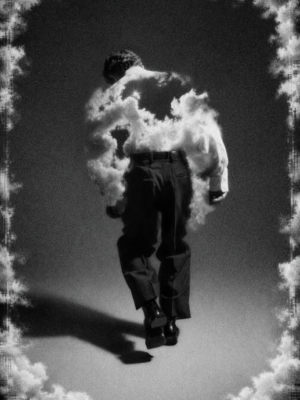
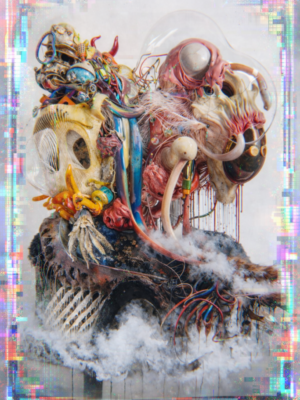
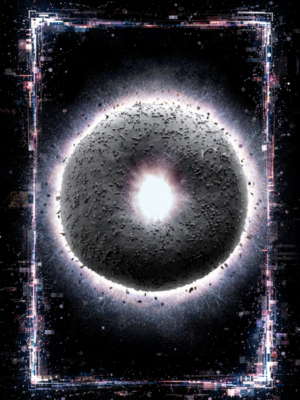


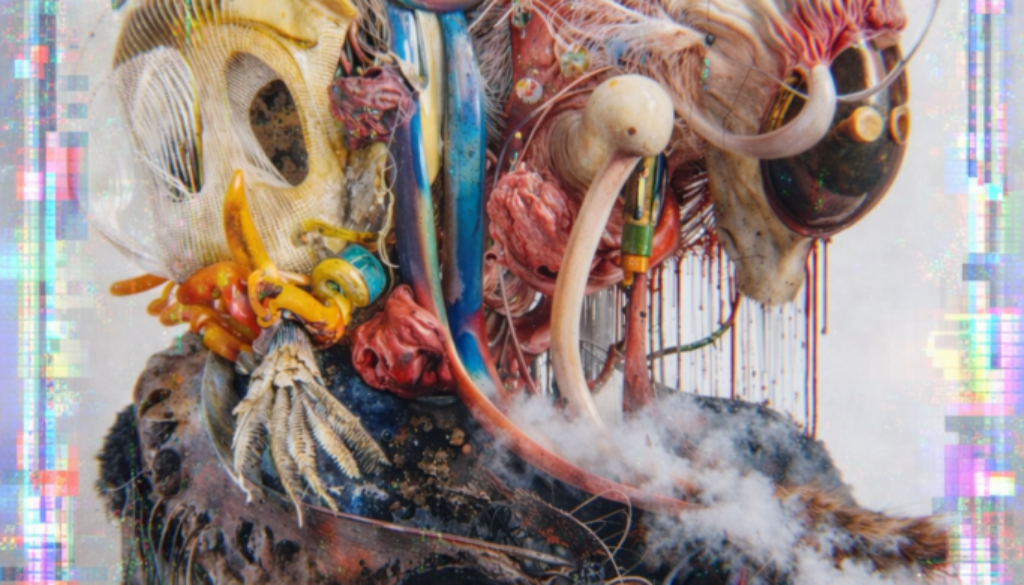

Formidiables enters The Wrong Biennale with a clear wager: that the recent flood of AI-driven horror is not only a taste for darkness, but a reason for images to return to bodies. The pavilion frames this moment as a gothic revival tied to the “awakening” of machines, where fascination replaces simple fright and horror shifts toward something more aesthetic and contemplative. In that shift, the figure becomes a counterweight to the weightless feel of the digital age, and the pavilion says this directly by linking the new horror mood to “a tangible return to figurative art” and to renewed interest in form. The Wrong Biennale context matters because it treats the web as exhibition architecture, and Formidiables leans into that idea by presenting itself as a castle-like route through distinct rooms, each one testing a different way the body can reappear: as portrait, as creature, as ritual actor, as engineered object, as shadow, and finally as an entry in an evolving archive. Curated by Michele Vitobello, the pavilion gathers artists working with AI directly, in collaboration, or in response, and that range keeps the figurative revival from narrowing into one look. Across the rooms, the most important shared gesture is not the presence of gore or gothic props, but the insistence that horror needs a subject you can read: a face you can meet, a body you can measure, a creature whose anatomy invites comparison, and a gaze that makes the viewer feel addressed rather than merely entertained.

The Garden
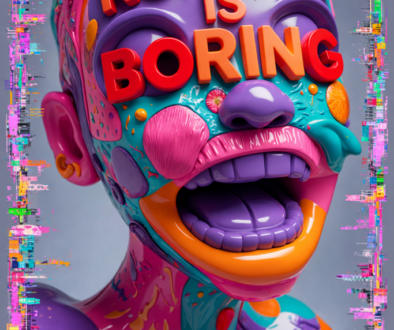
The garden is where the pavilion begins its figurative argument in the most direct way, by placing the viewer in front of faces and beings that feel “grown” rather than simply rendered. Even when the imagery is lush or fantastical, it keeps returning to recognizable anatomy, as if the first step into AI horror is a refusal to drift into abstraction. The garden page names works like “Bird Song” and “New Bestiary,” and those titles are telling because they suggest song and taxonomy, two human tools for making sense of living forms. Here, the figure comes back through hybridization: portraits become masks that read like creatures, and creatures borrow the visual grammar of portraiture, with centered composition, frontal presence, and a feeling that the subject is posing for a record. The horror is not always loud; it is often held in subtle wrongness, in eyes that feel too still, in symmetry that slips, in surfaces that look tactile but impossible. In a space called a garden, that wrongness feels botanical and evolutionary rather than violent, like a new species emerging from a dataset the way a plant emerges from soil. The renewed pull toward figurative work shows up as careful attention to surfaces of identity: skin-like textures, ornament that sits on a head like a crown, facial structure that holds the image together even when the rest becomes surreal. This is the pavilion’s first proof that AI horror revives figuration by making the body the site of invention, because a garden is only interesting when there is life to observe, and these images insist on being observed as living forms.

The Great Hall
The great hall shifts the figurative return from “new life” into “social scene,” and that matters because horror becomes sharper when the body is not alone. The room title implies gathering, ceremony, and public display, and the works shown there lean into the theatrical weight of the figure as an actor inside a staged world. The page highlights “Sacre Rouge,” and even without treating the room as a simple showcase for one artist, the naming signals a mix of sacred language and blood language, which is one of the oldest engines of figurative art: the body as symbol. In this hall, the figure returns not only as face, but as posture, garment, and role. The images often feel like they inherit the composition of historical painting and engraving, where bodies are arranged to tell a story through gesture, proximity, and gaze. That is important for the pavilion’s theme because a “philosophical” horror needs more than an effect; it needs an image you can read like a scene, where meaning sits in how bodies relate. This room makes figuration feel necessary again by making the viewer decode what the bodies are doing: hiding, presenting, witnessing, worshiping, threatening, resisting. Even when faces are partially obscured or stylized, the hall keeps them central, as if the genre is rebuilding a figurative literacy that digital culture had started to neglect. The result is a gothic mood that does not float above the human world; it is anchored in it, and the anchor is always the figure, treated as the most efficient way to hold narrative, tension, and desire in one frame.

The Tower
The tower is where the pavilion makes a decisive move: it lets the figure return through time, not only through stillness. The page frames the room around video and music, crediting “Video and music by Brunirax” and listing multiple works that read like transmissions, warnings, and psychological states. This is the point where the figurative revival becomes kinetic, because horror in motion tends to intensify the need for bodies, even when those bodies are fragmented, masked, or implied by the camera’s attention. Titles like “Neural Phantasmata: Eyes of the Machine,” “Looking for Sara,” and “Post Human Roots” suggest three different figurative pressures: the face as surveillance and gaze, the person as missing subject, and the body as something that continues after the human. The tower also introduces glitch as a form of embodiment. When the image breaks in time, it can feel like a nervous system, like a body reacting rather than a file corrupting. That matters for the pavilion’s larger claim that horror is becoming contemplative, because contemplation in a digital space often happens through repetition, looping, and slow damage to the image. In a tower, you expect signals, echoes, and distance, and the room uses that expectation to turn AI aesthetics into a kind of haunted broadcast. The renewed pull toward figuration appears here as insistence on subjects even when they are unstable: eyes that return, a name that returns, a presence that keeps trying to cohere in the noise. Instead of treating AI as a machine that dissolves the human into pattern, the tower treats pattern as the weather that bodies have to move through, and that movement makes the figure feel urgent again.

The Alchemy Laboratory
The alchemy laboratory is the pavilion’s most literal metaphor for how AI can revive figuration while also changing what “figure” means. Alchemy suggests transformation, fabrication, and experiments that blur the line between life and object, and the images in this room often read like engineered bodies, prototypes, or specimens assembled from incompatible materials. The key figurative move here is that the body returns through plausibility: surfaces look touchable, lighting looks photographic, and the subject looks like it could exist, right up until the details contradict each other. That contradiction becomes the aesthetic charge. Instead of pushing away from the figure, the work pushes deeper into anatomy by inventing new anatomy, using the model’s ability to blend skin with plastic, bone with wire, cloth with membrane. The horror is not only in grotesque content; it is in the fact that the image convinces the eye to believe in a body that cannot be built, which turns the body into a kind of lie that still feels intimate. This room supports the pavilion’s claim that horror is moving beyond simple scare tactics, because the laboratory’s strongest moments are not shocks but lingering curiosities: what is this made of, what is it becoming, what kind of life does it suggest. The renewed pull toward figurative work becomes a pull toward constructed presence, where a “monster” is not only a creature with teeth, but a body that looks manufactured by attention itself. In that sense, the laboratory is where the pavilion argues that AI’s most telling output is not background atmosphere, but the stubborn need to fabricate beings.

The Dungeon
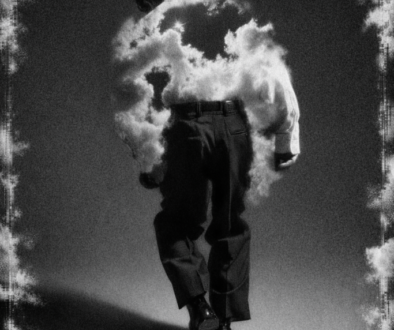
The dungeon takes the figurative revival to its darkest logic: when the image is stripped down, the figure still remains. A dungeon implies confinement, disappearance, and the fear of what cannot be fully seen, and the works in this room often lean into silhouette, low light, and the feeling of a body suspended between presence and erasure. This is where horror proves how dependent it is on the figure, because the less information an image gives, the more the viewer looks for the human outline, the readable posture, the clue of a hand or face. The figure returns here as a problem the eye cannot stop trying to solve. That effort is part of why the pavilion describes horror as becoming more contemplative, since contemplation often begins with partial visibility and the desire to complete what is missing. In a dungeon, the body can become symbol without needing decoration: a lone silhouette can carry dread, longing, and myth at once. The room also frames the machine itself as dungeon-like, in the sense that a model can feel like a closed space where images emerge without clear origin, assembled from hidden training. That association adds a second layer to the figurative return: the figure is not only what horror depicts, it is what the system repeatedly produces when asked to express darkness. The body becomes the most reliable unit of meaning inside the blackness, and the dungeon makes that reliability visible. Even as images approach abstraction through darkness, they do not escape the figure; they prove that the figure is the last thing left when everything else is taken away.

The Library
The library is the room where the pavilion turns its figurative revival into a record, and that shift matters because figuration does not only live in single images; it lives in accumulation, comparison, and the slow building of a shared visual vocabulary. On the site, the library holds the pavilion’s theme statement and a consolidated view of participating artists, making it the place where the show becomes legible as a collective project rather than a sequence of isolated shocks. This room strengthens the central idea that AI horror encourages a return to figurative art even outside commercial contexts, because it frames that return as something many artists are arriving at from different directions: portraiture, creature design, cinematic stills, graphic stylization, and experimental video. The library also clarifies the pavilion’s posture inside The Wrong Biennale: participation is gathered through an open call as well as curatorial selection, and the show positions itself as research in public, not as a marketplace. That matters for the figurative theme because it suggests the figure is returning not merely as a trend to monetize, but as a shared problem artists are working on together: how to make bodies meaningful again in an age of automatic images. In a library, the monster stops being only an image and becomes a concept you can track across authors, and the “revival” stops being a claim and becomes a pattern you can verify by moving through names, works, and repeated motifs. The figure reappears here as archive material: faces and bodies as entries in a new kind of gothic catalog, built from networks, screens, and collective attention.

The strength of Formidiables is that it uses its rooms to show the same insistence from different angles: horror is the genre that refuses to let the body disappear. The garden treats the figure as new life, the hall treats it as social theater, the tower treats it as signal and rhythm, the laboratory treats it as engineered object, the dungeon treats it as the last readable shape inside darkness, and the library turns all of that into a shared record. Across those shifts, the pavilion’s guiding question about whether machines create monsters becomes less a prompt for spectacle and more a way to talk about how images regain weight when they regain bodies. The revived gothic mood is not only a set of aesthetics; it is a reason to practice figuration again, to return to faces, posture, anatomy, and presence as the core materials of meaning. That is why the pavilion’s claim about a renewed interest in form rings true: the most compelling AI horror does not win by being stranger than reality, it wins by being just readable enough to feel like a being, then just wrong enough to feel like an omen.
Formidiables is accessible through The Wrong Biennale and the pavilion site (https://www.formidiables.com/) and is open 24/7 until March 31, 2026. It features works fromWorks by Serge Aa aka Horomox, Vinicius Andrade, Vincenzo Ascione aka Loop507, Terenzio Avantaggiato, Daniel Aviles, Alina Blitz, Alice Zoe Bresciani, Brunirax, Nicolas Crocetti, Mauro de Donatis aka Seneh, Niara Frossard, Maciej Tarnowski aka GLΛ55HΣΛD™, Maryna Gradnova, Kacper Krajewski, Emmanuel Laflamme, Yichu Li, Marcell Malejkò, Crystal Marshall, Oysterverse, Jazaini Pau, Veronika Pell aka Mindeye, Arminda da Silva, Shinjoku 13, Yassiek Stochastic, Soma Studio, TSK aka unclesean, Wicked Whispers. It was curated by Michele Vitobello in Puglia, Italy.