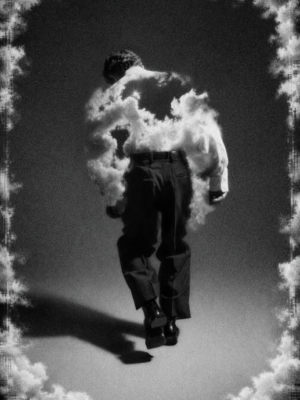
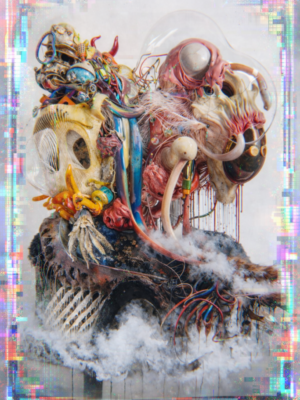
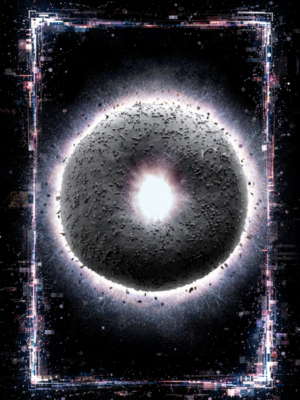


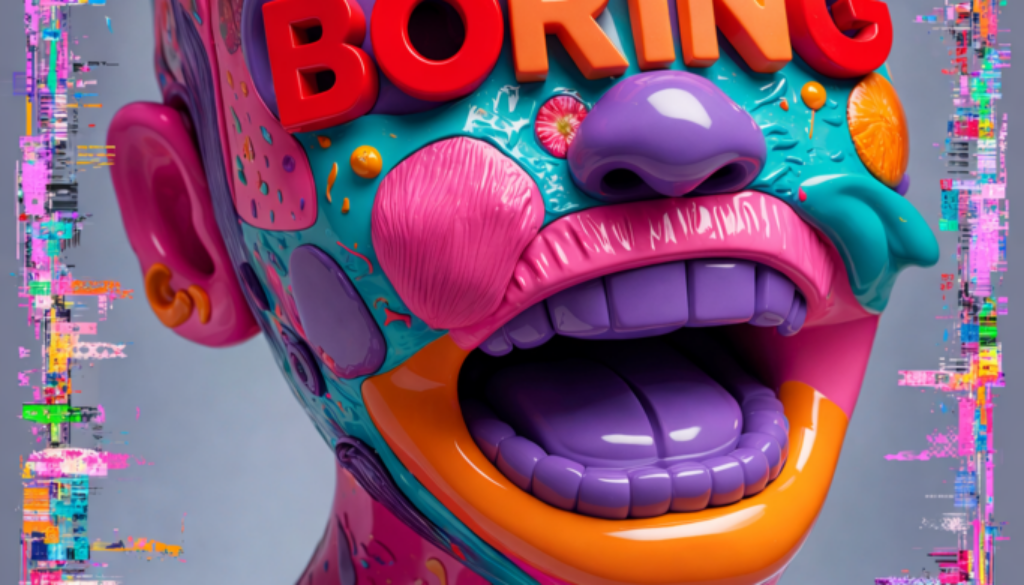
The Wrong Biennale treats the internet as its exhibition space, not as marketing for a show that lives somewhere else. Instead of one building with one set of walls, it is organized as a wide network of “pavilions,” each one curated and hosted independently, sometimes fully online and sometimes with offline “embassies” that mirror parts of the event in physical spaces. This structure changes what it means to visit an exhibition, because the visitor is not walking a single route, they are moving through a web of small worlds that connect through links, shared themes, and shared attention. In the current edition, the biennale is framed around the artistic potential of artificial intelligence, but the event’s bigger idea is more basic than any single technology: art can be distributed, decentralized, and built from many kinds of participation at once. A pavilion in this context is not just a page to browse, it is a container with its own rules of entry, its own tone, and its own way of turning “navigation” into part of the experience. Dr!nk Water sits inside that logic perfectly, because it is not trying to be a clean portfolio or a fixed room of finished works. It is built to feel like a live environment where fragments, uploads, and returns are expected, and where the audience’s presence is not separate from the work’s growth.

Dr!nk Water describes itself as a living archive, and that phrase is the key to reading everything else it does. A normal archive aims for stability: it collects, organizes, and preserves, trying to keep an “original record” intact. A living archive does something more active. It collects, but it also transforms, and it treats change as part of what is being preserved. The pavilion’s own language leans into that motion: fragments of chats, AI remixes, and recovered files converge into a participatory narrative where absence and presence sit side by side, and where emotion is allowed to “glitch” across time. The most direct line in its description is also the most revealing: messages from visitors can “join the flow,” fusing with the archive to keep creation alive and endlessly evolving. That makes the exhibition feel less like a set of objects and more like a system, one that is designed to keep accumulating traces, then re-presenting those traces in new combinations. The show is not promising clarity or completeness, and it is not selling the fantasy of perfect digital memory. It is building an atmosphere out of the way memory actually behaves in networked life: it flickers, it repeats, it resurfaces out of order, and it changes meaning depending on where it returns and who is there to read it.
Calling it an “archive that eats messages” is a useful way to understand the mechanics without making it sound mystical. Messages are treated as raw material: short lines of text, shared images, stray links, jokes, confessions, arguments, the kinds of fragments that usually disappear into scrolling history. In this pavilion, those fragments do not just sit in a folder. They become inputs. The archive behaves like a machine that takes in language and media, then pushes them through processes that can distort, remix, and re-stage them. “Recovered files” add another layer that feels familiar to anyone who has lived online for long enough: content is lost, corrupted, buried, or separated from its context, then later pulled back into view. That recovery is never neutral, because what returns is rarely the same as what was first posted. Even without any advanced tools involved, the act of re-sharing is already a remix: the caption changes, the platform changes, the audience changes, and the meaning shifts. Dr!nk Water makes that everyday truth into the center of the exhibition. Its phrase “networked consciousness” works best as a metaphor for a shared mind made out of leftovers: a collective memory built from partial records, recurring phrases, familiar images, and the persistent feeling that what a group has said and saved can outlive the moment that produced it.

The companion site, patadadaacausalism2526, makes the “system” feeling explicit by presenting its rules like a terminal script. The page opens with an “AI fair use notice” and then turns the exhibition’s process into a set of commands: upload, transform, remix. After that, the logic continues in a deliberately code-like voice: contributions enter public domain, contributions may appear online, contributors can be added to a list, recognition can be given. It reads like a manifesto written in the language of software, which matters because it treats administration as part of the artwork’s surface instead of hiding it as fine print. Two terms inside that script deserve clear meaning. “Public domain” is used here as a stance about reuse: once something is placed in the public domain, it is presented as material that others can freely build from rather than something locked behind exclusive ownership. “Fair use” is a legal concept that can allow limited reuse of copyrighted work in certain contexts, but it is not a universal permission slip; it is a framework that is often argued case by case. The site’s final line ties the whole tone together by naming its method as “chaotic, acausal creation,” which is a way of saying that the work is not built on a clean chain of cause and effect. It grows through collisions, echoes, resurfacing, and recombination.
Glitch is often mistaken for a visual filter, but in projects like this it functions more like an honest admission about how digital meaning travels. A glitch is a visible sign that a system failed to carry information smoothly: compression throws away detail, a file breaks, a link dies, a platform strips metadata, a screenshot loses its backstory, a message survives but its tone does not. Glitch art uses that failure as material, sometimes by intentionally provoking errors and sometimes by amplifying the artifacts that already exist in digital circulation. Dr!nk Water’s language about “missing data” and “info lost in transit” fits this perfectly, because it frames distortion as a natural shape of memory under network conditions. In a clean museum setting, preservation can suggest that history is stable and retrievable. In a networked setting, preservation often looks like drift: copies multiply, versions compete, and context decays. By embracing glitch, the exhibition refuses to pretend that memory can be perfectly stored. It shows memory as something that survives through damage, where the scratches and distortions are part of the record rather than a flaw to hide. This is also why interface imagery feels at home around the project: command lines, folder lists, and screen-like compositions read as visual proof that the archive is not a neutral box. It is a designed environment, and design shapes what can be remembered and what gets lost.

The strongest tension in the project is the one most collaborative online spaces share: the desire for free remixing colliding with the desire for clear recognition. The patadada page does not treat credit as an afterthought, it writes recognition into its “system” language, implying that attribution is part of how the archive stays social instead of becoming anonymous churn. At the same time, the public-domain framing pushes hard in the direction of openness, which can be liberating and risky at once. Openness allows rapid evolution: one person’s upload becomes another person’s transformation, which becomes another person’s remix, and the archive gains new forms without waiting for permission every time. But that same openness also demands responsibility, because fragments can travel farther than intended, and remixes can detach from the people they came from. Dr!nk Water does not solve that problem with a neat moral lesson. It stages it as a lived condition of digital culture, where participation is both an offering and an exposure. The memorial line on the patadada site deepens that emotional register by suggesting the archive is also a place where people hold onto someone through traces, names, and repeated presence. In that sense, the work is not only about spectacle or technique. It is also about how communities persist through files, messages, and recurring signals even when time breaks continuity.
What makes Dr!nk Water land as an exhibition, and not just as a concept, is how directly it treats communication as material. It refuses the idea that messages are disposable, and it refuses the idea that archives must be still. Instead, it builds a space where messages can be absorbed, reshaped, and returned, and where the instability of digital memory is not treated as a problem to fix but as a truth to work with. The result is a pavilion that feels less like a room of objects and more like a living process: a loop of input and output, presence and absence, loss and recovery, signal and noise. The glitch aesthetic is not there to show off chaos for its own sake. It frames chaos as the atmosphere of contemporary memory, and it frames remix as the way meaning survives when the record is incomplete. The strongest impression the project leaves is that “collective” is not a theme, it is an engine. The archive stays alive because traces keep entering it, and because those traces keep colliding until they produce new shapes. In a moment when AI is often discussed as a tool for replacing human expression, Dr!nk Water flips the focus toward a different reality: machines, interfaces, and networks are already part of how people remember each other, and art can make that condition visible without cleaning it up.

The exhibition will be available on the link Dr!nkWater ⧉ M!SS!NG D∆T∆ // info lost in transit █▓▒░ until the end of March 2026 and it features works by Masja Folkers, Cesar Morales, Love Chip, Dadolocesimo Gas Ultragaz, Cody Banks, Benji Friedman, Grietje Verkoelen, Jesús Lastra, Adrian Pickett, Xavier Dallet, Mustard 23. It was curated by Dr!nkWater Collective in Baexem, Netherlands.