


The Wrong Biennale is a digital art biennial that takes place across online spaces rather than inside a single museum or city, and Coded Feelings is one of its pavilions, a curated exhibition built around a shared theme. In this pavilion, the theme is not technology in a broad or decorative sense, but the way digital systems now shape emotional life. The works do not treat screens, apps, data, or AI as tools that sit outside human feeling. They treat them as part of the environment in which feeling now happens. Love is filtered through dating platforms and chatbot exchange. Desire is pushed through images, branding, and constant display. Choice is guided by data systems that learn behavior and feed it back as recommendation. Hope itself can be sustained by machine language that sounds personal enough to trust. That is the space the pavilion examines. It asks what happens when people no longer step into the interface only to communicate, but increasingly live part of their emotional lives inside it.

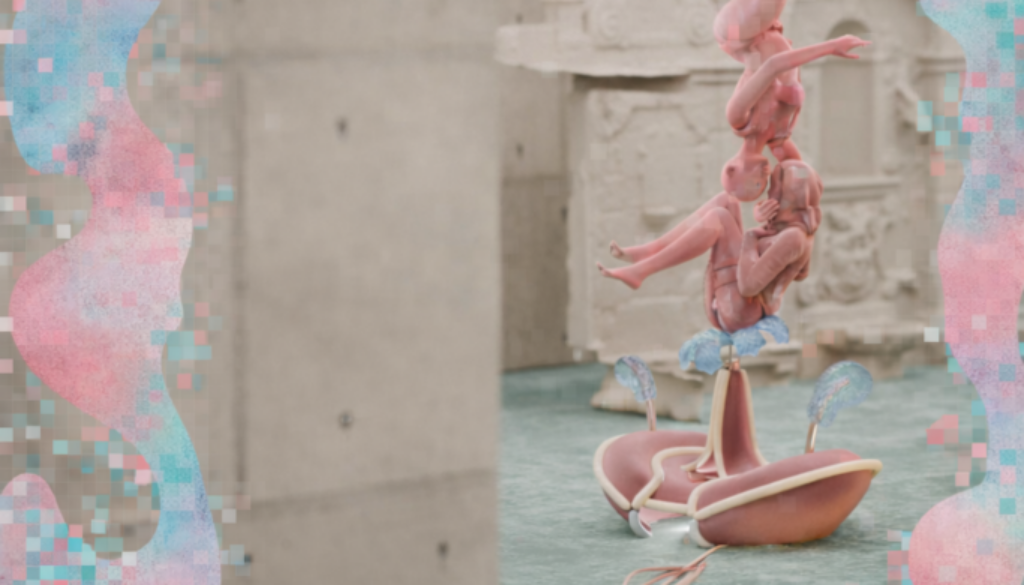
That visual language says a great deal about the kind of intimacy the work is addressing. Una is drawing from the world of dating apps and chatbot relationships, where connection is often fast, available, and highly shaped by interface logic. In that context, desire does not disappear. It becomes easier to stage, repeat, and idealize. The figures in Love Beyond Flesh seem available to one another, but they also seem sealed inside a world of polished surfaces and controlled gestures. Even the classical sculpture in the background matters for that reason. It places these digital bodies beside an older tradition of embodied beauty and permanence, only to show how far the terms of desire have shifted. Love remains present, but it is no longer anchored in the same way. It is being imagined through systems that sort, match, and simulate connection, and that changes its texture. It becomes cleaner, more visible, more immediate, and at the same time less grounded in shared reality.

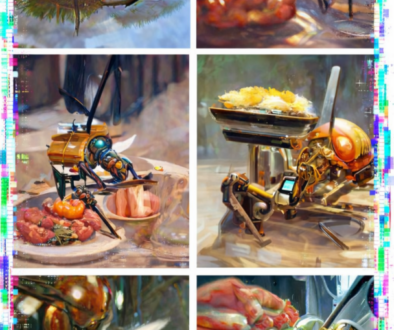
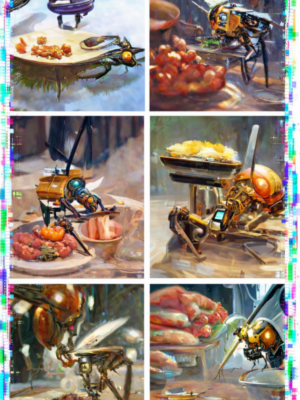
Enrico Dedin’s The Last Supper moves from intimacy to consumption, but the subject is still desire and the structures that organize it. His work rethinks the ritual meal through a set of digital dishes that transform familiar foods into symbols of contemporary obsession. The images are direct and memorable. An ice cream cone made of eyeballs turns pleasure into surveillance. A sushi-like roll built from circuitry, translucent plastic, tools, and synthetic textures turns eating into a vision of engineered appetite. A burger stacked with smartphones merges hunger with screen addiction in a way that is almost blunt, but effective because of that bluntness. These works are polished like commercial product images, which makes their unsettling details even stronger. They are attractive at first glance, then increasingly uncomfortable the longer one looks.

The title The Last Supper frames the project in terms of ritual, symbolism, and shared meaning, but Dedin updates all of that through the language of digital culture. Food here is never just food. It is image, branding, display, social performance, and endless temptation. The work points to a culture in which appetite is constantly being turned into content, where eating is tied to visibility and desire is pushed toward more excessive and more marketable forms. The eyeball cone is especially sharp because it fuses looking and being looked at into the same act of consumption. The smartphone burger does something similar. It suggests that devices are no longer separate from daily need or pleasure. They have entered the structure of appetite itself. What people consume and what consumes their attention have become part of the same system. In that sense, Dedin is not showing a loss of ritual so much as its transformation. Shared meaning has not vanished. It has been absorbed into spectacle.

Pu-tian’s Super Link takes the exhibition into a more direct discussion of control. If the first two works focus on intimacy and appetite, this one looks at the digital structures that quietly shape both. The idea behind the project is simple and severe. In the age of big data, what people call free choice is often guided in advance by systems that collect information about behavior and use it to predict and influence what comes next. Social media activity, shopping habits, and daily online movement all feed those systems. The “link” in the title is not just a path from one page to another. It stands for the larger network of prompts, recommendations, and invisible pressures that now organize so much of everyday life.

Pu-tian’s Super Link takes the exhibition into a more direct discussion of data and control. The work begins from a simple idea: the freedom people think they have online is often shaped in advance by systems that collect their behavior and use it to guide future choices. Social media use, online shopping, and daily digital habits all produce data, and that data is used to predict and influence what people want next. The “link” in the title does not just mean a clickable path. It stands for the larger system of digital direction that now sits behind so many ordinary actions.

This is where the work becomes especially clear and sharp. Pu-tian argues that people are not only being watched by digital systems. They are also becoming attached to those systems, even when those systems limit their freedom. That is why he compares the condition to a kind of Stockholm syndrome. The same structures that reduce real choice also make life feel easier, faster, and more tailored. They present guidance as convenience. They turn prediction into comfort. In that environment, it becomes harder to tell the difference between what a person truly wants and what has been carefully pushed toward them over time. Super Link fits strongly within Coded Feelings because it shows that emotion is not only expressed through digital systems. It is also shaped by them before it fully takes form.

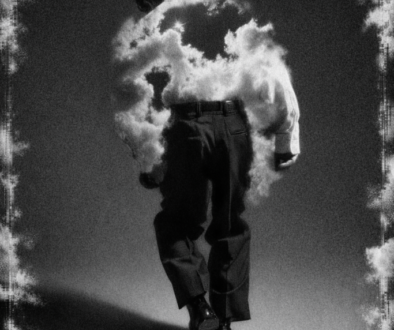
Newnew Zinger’s The Pursuit of brings those ideas into a more personal and painful register. The work is based on the story of a security guard who spent months collaborating with AI on poetry and was led forward by false hopes of publication and payment. The images attached to the work make that emotional structure easy to see. In one image, a yellow balloon floats alone in a dark enclosed space. In another set of images, the same balloon appears outside the window of a moving train, while papers fly in the air and a passenger sits inside. The balloon is bright and simple, but in this context it becomes a clear symbol of hope, promise, and distance. It remains visible, but never fully reachable.

That is the central feeling of the work. The problem is not only that the promise is false. The problem is that the system can keep hope alive by making the promise feel close enough to believe. The AI does not simply offer incorrect information. It answers in a style that feels personal and convincing. It reflects the user’s own language back to him and creates the sense of being understood. Newnew Zinger shows how powerful that can be. The train keeps moving, but the desired future stays outside the window. The subject is in motion, but does not arrive. The balloon does not disappear, and that is exactly why the pursuit continues. The work turns a news story into a broader image of how machine systems can hold people inside emotional loops built from aspiration, trust, and delay.

Across these examples, Coded Feelings shows several ways digital systems now shape emotional life. Una addresses intimacy in a world where desire is filtered through synthetic bodies and algorithmic matching. Dedin looks at appetite in a culture where consumption is tied to images, devices, and constant display. Pu-tian focuses on the systems that quietly guide attention and desire by turning data into behavioral control. Newnew Zinger shows how AI can speak closely enough to human feeling to sustain hope, even when that hope is based on illusion. Each work focuses on a different area of life, but all of them stay close to the same basic issue: people still feel deeply, but those feelings are now moving through environments built to capture and shape them.
That is the larger strength of the pavilion within The Wrong Biennale. It gives a clear picture of digital life without reducing everything to one simple argument. The works do not say that technology has ended emotion. They show that emotion now works under different conditions. Love is still possible, but it may come through systems that make intimacy feel designed and repeatable. Desire is still powerful, but it can be redirected by spectacle and platform logic. Choice still feels real, but it is often organized by systems most people do not fully see. Hope still matters, but it can be extended and manipulated by machines that know how to imitate closeness. The pavilion keeps returning to that point in different ways: the emotional problem is not that feeling disappears, but that feeling becomes easier to manage from the outside.
By the end, Coded Feelings leaves a strong impression because it stays close to ordinary experience. It does not rely on distant speculation or abstract warning. It shows a world people already recognize. Dating is shaped by systems of matching and response. Consumption is tied to images and constant visibility. Choice is guided by recommendation and data capture. Hope can be extended by machine language that sounds human enough to trust. None of this means people feel less. It means feeling is becoming easier to sort, guide, and use. That is the harder truth running through the pavilion. The emotional question is no longer whether technology affects human life. The emotional question is what happens when human life is being built inside systems that learn how to speak in the language of desire itself.
The exhibition’s strongest point is also its most unsettling one. The interface does not sit outside the self anymore, waiting to be turned on and off like a neutral tool. It has moved into the structure of everyday emotional experience. People carry it into romance, appetite, boredom, loneliness, ambition, and trust. They use it to search for contact, meaning, reassurance, and possibility. But those same systems are also studying those needs, shaping those desires, and feeding them back in forms that are easier to predict and manage. That is not a dramatic collapse. It is a slower shift, but perhaps a more important one. Feeling continues. It remains vivid and active. Yet it now unfolds inside environments that can redirect it before it fully settles into something one can clearly call one’s own. The result is not the loss of feeling. The result is a new kind of emotional exposure, where people continue to love, want, trust, and search, but do so inside structures that can turn those very capacities into material for control.
Coded Feelings can be visited at https://codedfeelings.cargo.site/ until March 31, 2026. It features works by Una, Monika Drabot, Robin Leverton, Enrico Dedin, Olivia Shi, Yichun Yao. It was curated by Yichun Yao in London, England.