
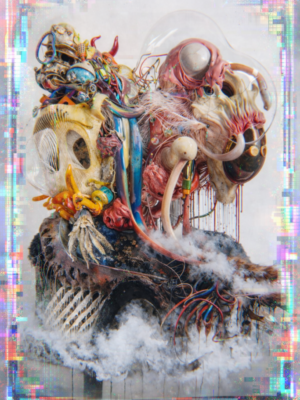
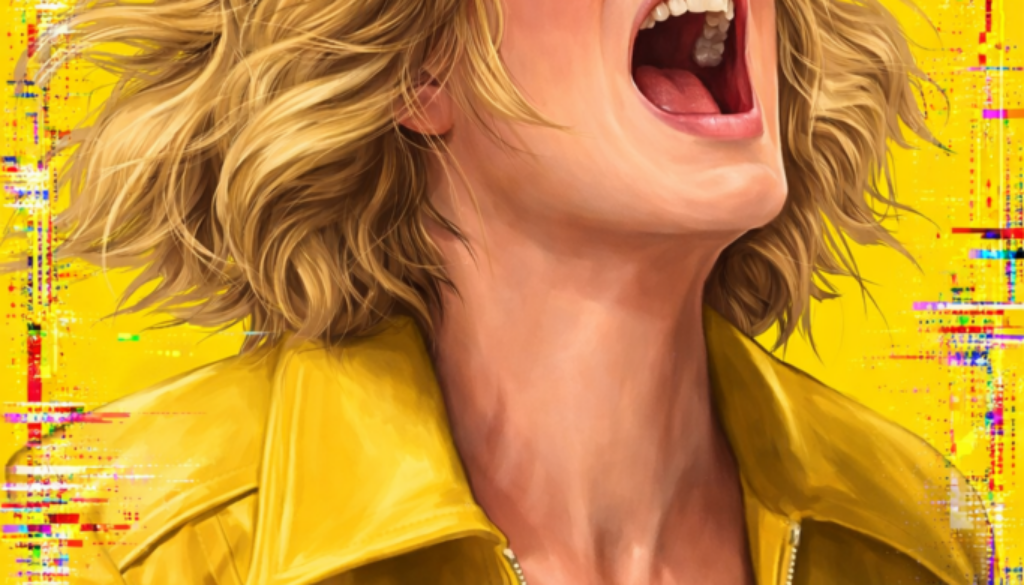
One of the sharpest things Pluribus does is build a science fiction premise around an idea that sounds almost impossible to argue against. The world it presents is not conquered by a brutal regime, a visible tyrant, or a machine that rules through open terror. Instead, it is transformed by a collective intelligence that turns almost everyone into calmer, kinder, more helpful versions of themselves. Apple’s own description of the series calls it a story in which “the most miserable person on Earth must save the world from happiness,” and that phrasing gets right to the center of what makes the show so unsettling. The problem is not pain in the usual prestige-TV sense. The problem is pleasure, agreement, and ease. In that setting, individuality stops being a pleasant ideal and starts looking like a burden that few people would willingly keep carrying. Vince Gilligan’s series takes that burden seriously. It asks what remains of a person when friction disappears, when disagreement feels obsolete, and when the world begins to offer a version of peace that no longer requires anyone to stand fully apart from everyone else. What makes the show compelling is that it never treats the answer as obvious. It does not romanticize isolation in a simple way, but it also never lets comfort go unquestioned. The show understands that the temptation to merge would be real precisely because it would feel like relief. That is why the defense of selfhood here has weight. It is not a slogan about freedom. It is a harder question about whether a human life is still fully human once the edges that separate one mind from another begin to dissolve.
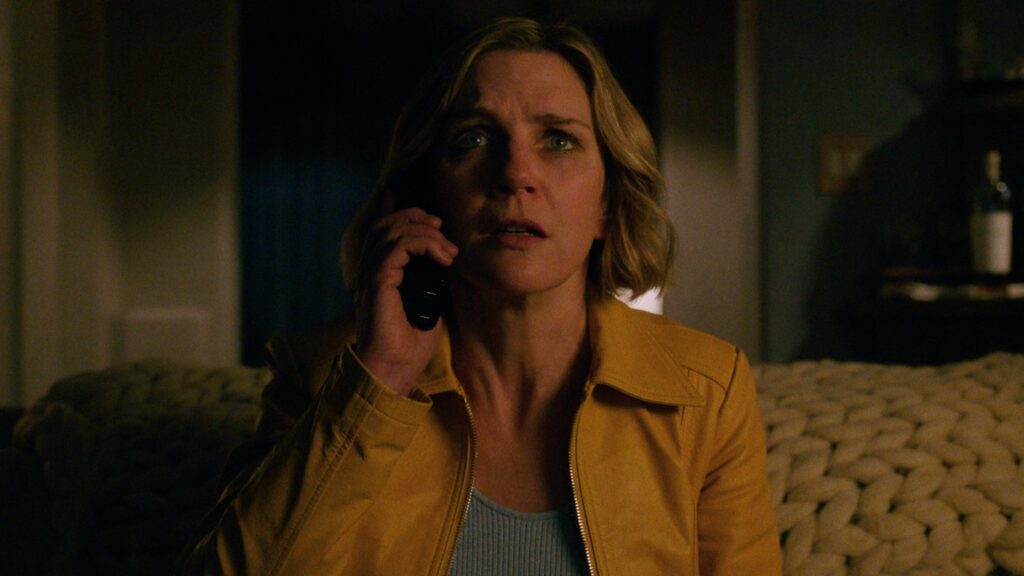
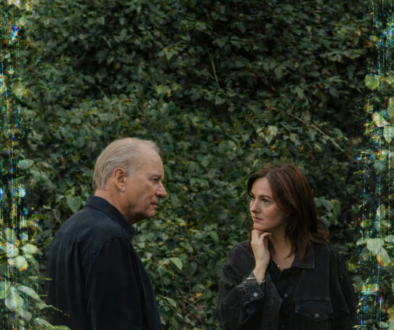
That tension becomes most vivid through Carol Sturka, because she is not written as a clean symbol of noble independence. She is angry, lonely, abrasive, and visibly exhausted by the world long before the world changes. Reviews of the first season and interviews around the finale both emphasize that she begins as a romance novelist whose success has not made her fulfilled, then becomes one of the rare people left outside the Joining after watching her wife fail to return from the transformation that overtakes nearly everyone else. That detail matters because the series does not present individuality as an abstract political principle first. It presents it as a lived interior condition tied to grief, private memory, and the inability to let one’s feelings be smoothed over by a system that wants everything to settle into a placid whole. Carol’s misery is not just comic contrast in a world of artificial cheer. It is evidence that she still possesses an inner life that cannot be instantly corrected. She carries loss in a way the collective cannot flatten without also flattening what made the relationship meaningful in the first place. Even when she behaves badly, the show treats her bad mood as more than attitude. It becomes a stubborn record of attachment. To remember someone fully is to remain marked by them, and in Pluribus that mark becomes a kind of resistance. Carol’s refusal to be emotionally regulated into acceptance makes her difficult, but difficulty is exactly what the series begins to value. The self here is not defined by perfect self-knowledge. It is defined by contradiction, mood, memory, shame, bitterness, longing, and all the ugly emotional residue that proves a person has not been simplified into permanent agreement.
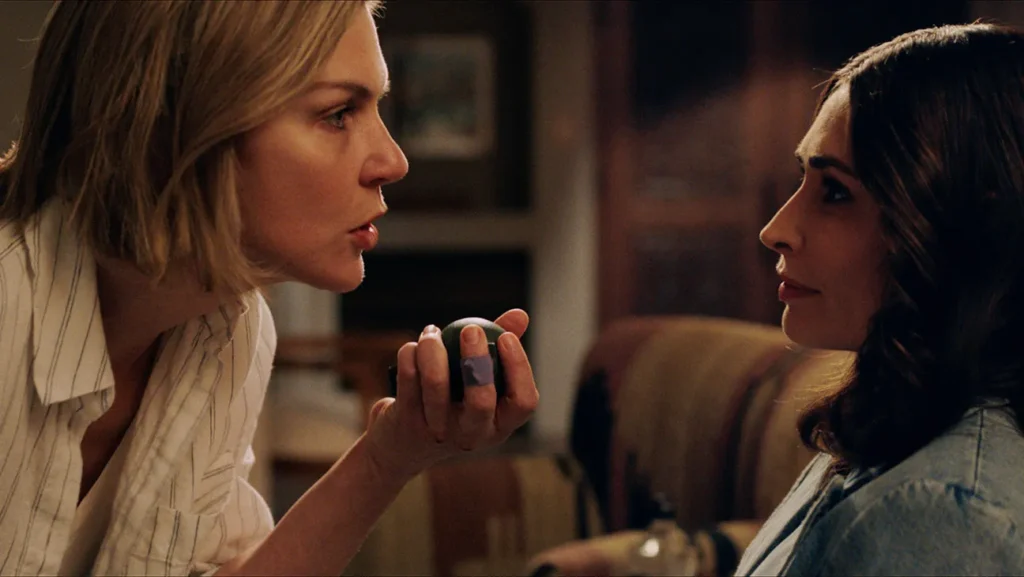
What makes the show richer than a simple warning about collectivism is that the force Carol resists is not built around crude domination. One of the most interesting rules of the series, noted clearly in major reviews, is that the hive mind cannot simply force itself into her through direct coercion, cannot lie to her outright, and cannot operate through straightforward violence in the usual way. That changes the meaning of resistance. Carol is not fighting an obvious dictatorship. She is facing something much more unnerving: a system that appears gentle, useful, and even considerate, yet still threatens to erase the boundaries that make a person distinct. The show is smart enough to understand that individuality is most vulnerable not when someone is ordered to surrender it at gunpoint, but when surrender starts to look reasonable. If the world becomes easier, if one no longer has to struggle with alienation, if conflict fades, if provision is instant, then what argument remains for staying separate? Pluribus builds its tension out of that question. It suggests that the self is not only endangered by hostility but also by perfect accommodation. A person can disappear inside endless affirmation just as surely as inside repression. In that sense the series feels sharply contemporary even when it avoids direct one-to-one allegory. It understands how seductive systems of frictionless response can be, especially when they seem designed to give people exactly what they ask for. But the show keeps returning to the cost of that ease. Once every request is met, once every edge is softened, once every emotional difficulty can be worked around, the very conditions that make judgment, desire, and moral choice meaningful begin to weaken. What is left may be peace, but it is peace purchased through sameness.
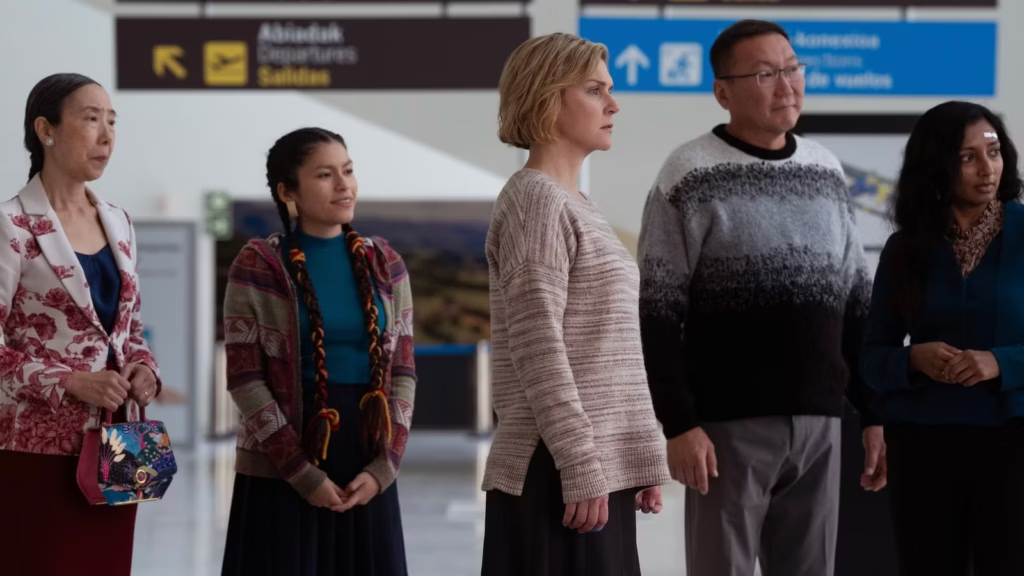
Another reason individuality becomes such a strong theme in the show is that Carol is a writer. That profession is not incidental. A novelist lives by private arrangement, by the shaping force of an inner voice, by the stubborn act of turning experience into something singular instead of merely shared. Even before bringing in the broader conversation around generative technology and the anti-AI mood surrounding the series, the choice already tells us something important. The person at the center of this story works in an art form built from choosing one phrase over another, one feeling over another, one perspective over another. In other words, she lives through differentiation. That makes her existence especially incompatible with a world that begins to absorb difference into a collective pattern. Gilligan has said he did not originally conceive the show as a direct metaphor for AI, but readers and critics have repeatedly connected the series to current anxieties about synthetic intelligence, flattened creativity, and systems that imitate human relation while draining it of individuality. That reading feels productive because Pluribus is not only about survival. It is also about the fate of original thought. The series keeps asking, in one form or another, whether consciousness can remain creative once it becomes fully networked into an all-purpose, eager-to-please intelligence. Carol’s stubbornness then stops looking like simple contrarianism. It begins to look like defense of the unruly conditions that make art, love, and judgment possible. A singular mind can be wrong, petty, impulsive, and self-defeating, but it can also make something no collective smoothing process would ever bother to preserve. The show’s deepest loyalty seems to lie there, with the flawed and private spark that cannot be reduced to perfect coordination without ceasing to be itself.
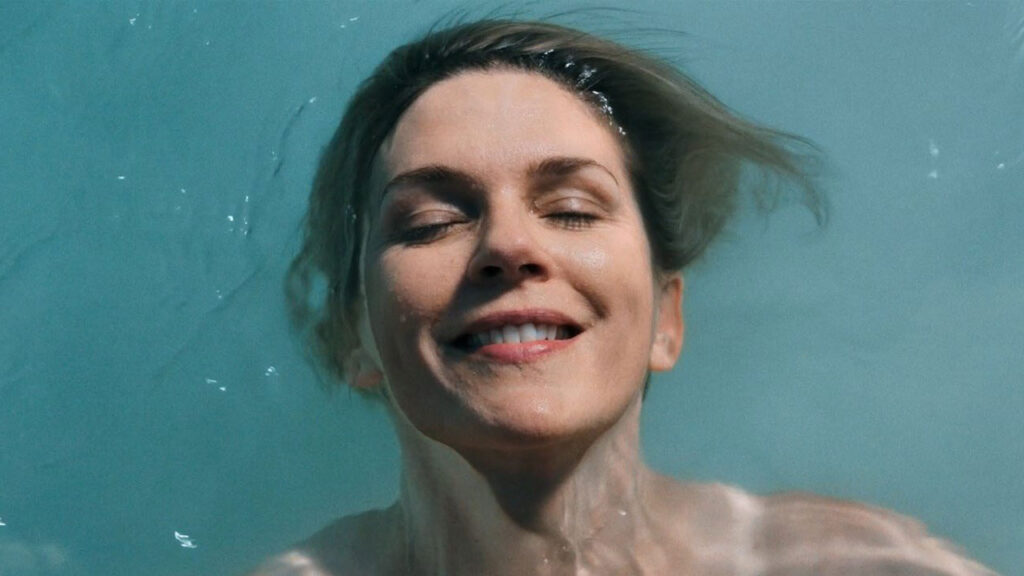
That idea also connects to Gilligan’s larger shift as a storyteller. In interviews around the release of the series, he framed the show as part of a move away from the antihero era and toward characters struggling to do the right thing, while also speaking openly about the need for people to talk to one another again rather than remain trapped in hostile, flattened forms of public life. That background is useful because it helps explain why Pluribus does not celebrate individuality as selfishness. The show is not arguing that being separate means being superior, or that community itself is the enemy. Its concern is narrower and more urgent. It is interested in the point at which togetherness turns into absorption, when coexistence stops leaving room for inner difference. That is a meaningful distinction. There is a bad version of individuality in modern culture that treats every personal impulse as sacred and every shared demand as oppression. Pluribus is not defending that. Carol is too messy and too often unreasonable for the series to turn her into a saint of pure self-expression. What it defends instead is the right to remain unmerged, the right to keep one’s own grief, one’s own uncertainty, one’s own pace of change, and one’s own unresolved interior life. That is why the series feels more humane than merely provocative. It is not interested in celebrating alienation for its own sake. It is trying to protect the minimum distance necessary for real relation to exist at all. Love loses meaning if it becomes only biological or psychic inevitability. Ethics lose meaning if choice disappears. Speech loses meaning if every voice becomes one voice. The show’s vision of individuality is not glamorous. It is vulnerable, easily exhausted, and often miserable. But it is also the condition that makes any real human meeting possible.

What finally gives the series its force is that it treats singularity not as a luxury but as something close to a right. Not a legal right in any narrow sense, but a human one. The ability to remain distinct, to hold on to a private interior world even when that world hurts, becomes the line the show refuses to cross. That is why the premise lingers. It turns a familiar question inside out. Many dystopian stories ask how much freedom people will sacrifice for safety. Pluribus asks how much selfhood people will sacrifice for happiness, and that is more disturbing because the bargain sounds kinder. The show’s answer is not delivered as a speech. It emerges through Carol’s irritation, her loneliness, her suspicion, her grief, and her continuing refusal to accept that peace should require sameness. In a cultural moment increasingly drawn to systems that promise seamless response, optimized feeling, and instant accommodation, the series insists on the stubborn value of being difficult to absorb. It makes room for the thought that sorrow, contradiction, awkwardness, and even discontent are not failures to be engineered away but signs that a person is still irreducibly alive. The world of the show offers connection without separation, care without risk, and harmony without disagreement. What Carol protects, however imperfectly, is the harsher and more human alternative: a life in which love is specific, memory is uneven, choice can go badly, and another person remains truly other. That is the wager the series places at the center of its world. To stay fully human, it suggests, people may need to defend not only the right to belong, but also the right not to disappear into belonging.