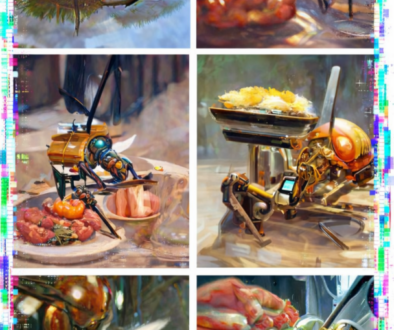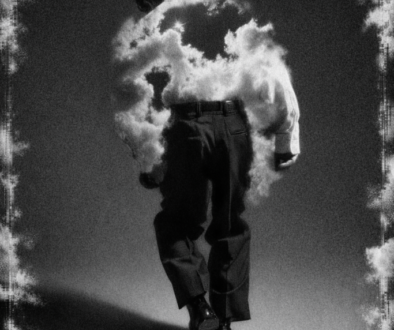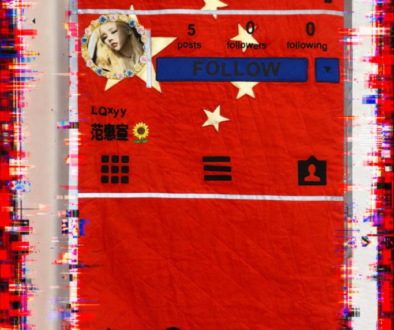


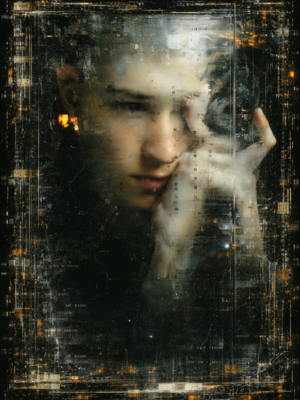

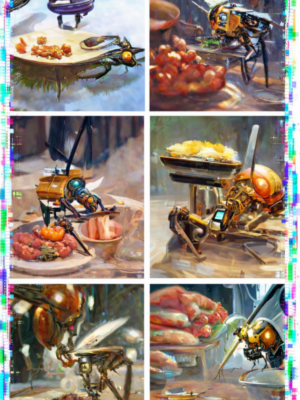


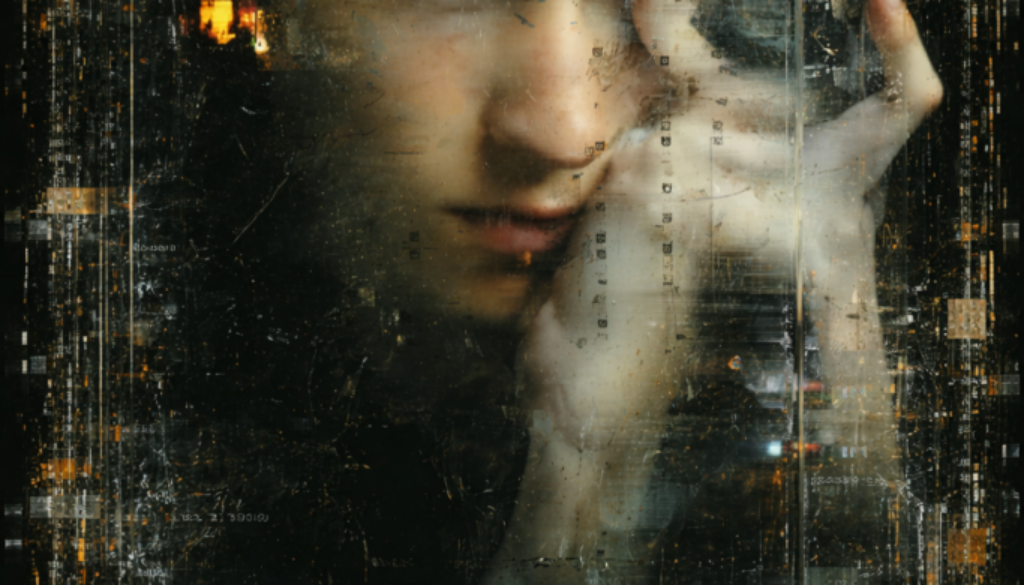

Art After AI looks, at first glance, like a normal exhibition you would encounter online. It has the familiar scaffolding of contemporary presentation, clean navigation, confident framing, an about page, an FAQ, and the sense that you are entering a curated space with an argument behind it. Then the premise quietly reorders everything: the artists are synthetic. The names, biographies, and statements are not evidence of a lived career so much as components in a designed system of credibility. The show does not announce this as a punchline. It treats it as a condition, and invites you to notice how quickly you still fall into the habits of art viewing, scanning for intention, scanning for influence, scanning for the reassuring story that explains why something deserves your attention.
The exhibition’s sharpest move is not simply that it uses AI. That conversation has become routine, often trapped between hype and panic. The sharper move is that it uses AI to produce not only images, but the surrounding social signals we use to decide what art is and who gets to make it. Artist statements that sound plausibly self aware, bios that imply context and authority, and an institutional tone that communicates legitimacy even before you have formed an opinion about what you are seeing. In that environment, the classic question, “Is it real,” starts to feel both urgent and strangely inadequate. Real, as in made by a human hand. Real, as in originating from experience. Real, as in earned. The exhibition keeps pushing you toward a better question, one that does not depend on metaphysical proof of origin: what does it do?

That shift changes the entire ethical and cultural frame. If an image can convince you, soothe you, frighten you, flatter you, or harden you, then its impact does not hinge on whether it began in a camera, a brush, or a model. If a persona can move through an art context with the right language and the right narrative posture, then authenticity is no longer a property you can locate inside the object. It becomes an agreement that forms around the object, between viewers, institutions, platforms, and repeating exposure. In a world flooded with plausible content, the value of “plausible” collapses. The default image is polished. The average artifact is persuasive. The old markers of skill and effort still matter, but they are no longer reliable shortcuts for trust. Art After AI turns that into a walkable problem. You experience your own perceptual training as it happens, the reflex to accept what feels coherent and to overlook what feels inconvenient, the speed with which your mind builds a story that makes everything sit still.
Because it is a website as much as an exhibition, its structure becomes part of the thesis. A browser is not a neutral venue. It is an authority machine that can make almost anything feel official if it is presented with the right design cues. The exhibition leans into that. The pages that promise transparency and context also demonstrate how transparency can become another aesthetic, another signal, another way to perform trust. At the same time, the show is unusually candid about process and mediation, which is where the argument deepens. Rather than pretending the human role disappears, it points to a redistribution of labor and agency. Making becomes less about singular execution and more about selection, iteration, framing, and editorial judgment. Curating starts to look like a form of writing, a way of shaping meaning by building context, deciding which voices exist, and determining how those voices are heard.

This is also where the exhibition starts to feel less like a technology demonstration and more like an institutional stress test. What does the art world validate when the artist is a system? What remains meaningful when scarcity is no longer guaranteed by human time and bodily limitation? The show does not argue that meaning evaporates. It argues that the gatekeeping logic mutates. Prestige, narrative, and access still govern value, but the mechanisms that produce them become more fluid, more scalable, and easier to simulate. The real struggle moves to infrastructure: who controls the tools, who controls the distribution, who can claim authorship, who can demand disclosure, who can refuse extraction, who can define what counts as acceptable use.
That is why the exhibition’s recalibration matters. “Is it real” is a question that tries to protect you by sorting objects into safe categories. “What does it do” is a question that demands responsibility. It asks you to think about images as social actors, things that circulate, persuade, and normalize. It asks you to pay attention to how quickly an aesthetic can become a resource, how quickly a voice can become a template, how quickly a culture can be mined and returned as a style. It also leaves room for wonder, because refusing wonder is its own kind of surrender. The point is to become literate in effects, not to become numb.

So the title is not just provocation. “10 Artists That Never Lived” is a reminder that the exhibition’s core subject is not whether machines can make art, but whether we can keep our interpretive and ethical footing when the traditional anchors of authorship wobble. The artists may be synthetic, but the consequences are not. The exhibition invites you to stop seeking purity tests and start practicing a more demanding form of attention, one that asks, every time the image lands, what it changes in you, what it changes around you, and who it changes things for.
Art After AI is easiest to enter through its simplicity. It looks like an exhibition because it behaves like one: a title that claims a thesis, a set of artist identities that ask to be taken seriously, and a website that provides the same interpretive scaffolding you would expect from a contemporary show. Then it reveals the condition that makes the whole experience hum with unease: the artists are described as AI born, and the exhibition is built to make you feel how quickly credibility can be manufactured when language, style, and persona are all reproducible. That premise lands with extra force because the exhibition is also a public participant in The Wrong Biennale 2025 to 2026, “The Wrong Returns,” an edition explicitly focused on the artistic dimensions of artificial intelligence and running from November 1, 2025 to March 31, 2026.

To understand why this matters, it helps to understand how The Wrong works. The Wrong Biennale is designed as a decentralized “exhibition of exhibitions,” built from independently curated pavilions and embassies that exist online, and sometimes offline, across many locations. Visitors do not attend one singular show. They move through a network. Each pavilion or embassy is a micro institution with its own framing, participants, and rules of attention, and the biennale’s scale comes from the accumulation of these nodes rather than a single central venue. In the biennale’s own language, the 2025 to 2026 edition is online at thewrong.org, with select offline embassies in cities worldwide, and it frames AI influenced culture as the connective tissue between otherwise diverse curatorial approaches.
Art After AI fits this model in a very literal way. On The Wrong’s listing, it is presented as “Art After Ai,” located as an embassy at TEKS.studio in Trondheim, Norway, curated by Zane Cerpina and Stahl Stenslie, with TEKS as the institutional home. TEKS, Trondheim Electronic Arts Centre, is itself a long running non profit platform for art and technology, established in 2002, and it runs TEKS.studio along with publishing and biennale initiatives. So the exhibition arrives inside The Wrong with both a networked distribution context and a local institutional anchor: it is legible as one node in a global mesh, and also legible as a produced show with real curators, a real venue, and an art and technology organization behind it.
What The Wrong adds, beyond reach, is pressure. The biennale’s structure encourages browsing by adjacency. You click from one pavilion to another, collecting aesthetics, claims, and worldviews in quick succession. In that environment, the question “Is it real?” becomes less useful than “What is this page doing to me?” because you are constantly being asked to trust, to suspend disbelief, to accept framing at speed. Art After AI uses that condition rather than resisting it. Its text on The Wrong’s page asks, directly, what remains of authorship, originality, and artistic intention when creation no longer depends on human hands, and it doubles down on the provocation by framing its participants as AI born artists. On artafter.ai, the project is unusually explicit about mediation and process, describing a long, curated development of the artist identities through iterative collaboration between ChatGPT and the curatorial team, and laying out a broader toolchain used across writing, visualization, voice, and sound. That transparency is not just informational. It is part of the exhibition’s conceptual engine, because it makes clear that “authorship” has shifted into something closer to editorial power: selecting, shaping, and legitimizing outputs through context.
This is where the show’s chosen recalibration becomes useful: stop asking if the image is real, and start asking what it does. Within The Wrong, this is not a philosophical luxury. It is a survival skill. A distributed biennale makes it obvious that meaning is not only inside the artifact. Meaning is also produced by placement, by navigation, by the surrounding texts that tell you what kind of attention to bring. Art After AI leans into those mechanisms, then asks you to notice how much of your certainty is generated by structure rather than origin. The question of authenticity becomes less about detecting a human hand and more about tracking effects: persuasion, legitimacy, extraction, identification, and the soft training of taste. That approach resonates with the wider “Art after AI” inquiry TEKS has been building through publishing, including EE Journal #4 from 2023, which explicitly frames the tension between art made by human hands and art made by algorithms, and asks how authenticity shifts as AI generated work proliferates in the market.
The Wrong’s own infrastructure further explains why Art After AI feels so native to this biennale. The open call and guidelines for The Wrong normalize the idea that exhibitions will be proposed and organized as pavilions and embassies, with curators supplying titles, roster details, links, and even a teaser paragraph that can be written with an AI tool if desired. This is not a footnote. It reflects a broader cultural shift that Art After AI is trying to make visible: the boundary between art making, art writing, and art marketing is increasingly porous, and generative systems sit across all three. When a biennale invites AI into the administrative language of exhibition making, not only into the art, it confirms the exhibition’s claim that the change is infrastructural. Curators are not only selecting works. They are selecting protocols of attention in a networked environment where the page, the caption, the persona, and the distribution channel can carry as much cultural weight as the object.
Placed inside The Wrong, Art After AI becomes a kind of mirror held up to the biennale itself. The Wrong’s scale and decentralization are often celebrated because they offer an alternative to conventional gatekeeping and geography. Its press materials emphasize global accessibility through curated virtual pavilions and interactive experiences, with select offline embassies hosted in galleries and institutions. But the same conditions that make it open and expansive also make it an ideal habitat for the question Art After AI wants to sharpen: when cultural experience is mediated primarily through screens, what do we treat as proof, and why? If the artist identity can be generated, if the statement can be generated, if the institutional tone can be generated, then the remaining ethical demand is not to hunt for purity tests. It is to track consequences. Who benefits from the circulation of a style? Who is copied, flattened, or erased when aesthetics become datasets? Who gains authority when credibility can be simulated? The exhibition does not resolve these questions. It stages them inside a real event ecology that is already grappling with AI as a cultural condition, not merely a tool.
That staging also clarifies the exhibition’s ambition. TEKS’s own description of the project positions it as a continuation of a longer inquiry, and the event framing notes that it is available online at artafter.ai during the biennale timeframe, with supporting texts and documentation, and also existed as a physical exhibition at TEKS.studio. In practice, this dual presence matters because it refuses a simple narrative where online equals dematerialized and therefore less serious. The Wrong’s model already treats online as a primary exhibition space. Art After AI uses that legitimacy, then asks the harder question: if the venue is a network and the artist can be synthetic, what is the viewer’s responsibility? The most useful answer the show offers is also the simplest: do not obsess over whether the image is “real” in the old sense. Ask what it does, how it moves, who it trains, and what it makes easier to believe the next time you click.