





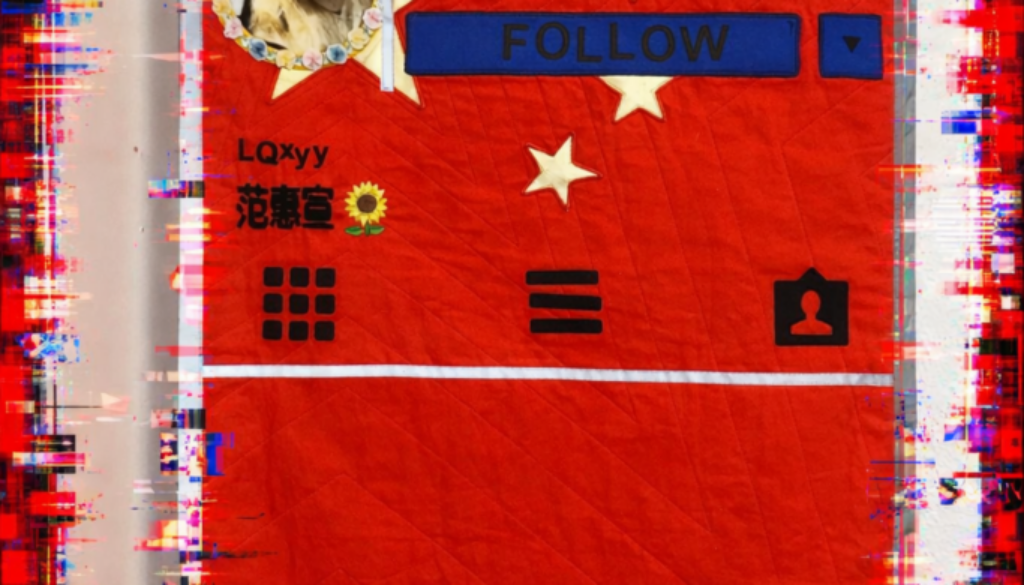

The internet does not only connect people. It categorizes them, ranks them, and assigns value to their visibility. Constant Dullaart’s work exposes that pricing system by intervening in the mechanisms that turn profiles into products and attention into a market.
Dullaart is an artist who treats platforms as built environments with rules that shape behavior. His work is not primarily interested in how the internet looks, but in how it operates. He focuses on the administrative layer of online life: follower counts, engagement metrics, demographic targeting, the quiet shadow economies that supply “activity,” and the way all of these elements harden into social reality. In his projects, the internet is not a neutral channel for expression. It is a system that produces reputations and assigns value through proxies that feel objective because they are measurable.
A recurring feature of his practice is that it stays close to the tools and conditions of the platforms it addresses. Rather than illustrating a critique from a safe distance, he stages situations inside the logic of social media and lets the consequences unfold. That method matters. It produces artworks that behave like the systems they examine, which is why they can feel uncomfortably direct. They do not ask you to imagine manipulation. They show you what manipulation looks like when it is normalized as routine.
High Retention, Slow Delivery is a key example because it makes the market logic of visibility impossible to ignore. The work is often described as an online performance in which Dullaart purchased a massive quantity of fake followers and redistributed them across selected Instagram accounts. The gesture is simple enough to be misunderstood as a prank, but its simplicity is the point. It demonstrates that a follower count can function like a certificate of importance even when the certificate is purchased. Once the number is attached to a profile, it begins to do social work. It signals that an account is worth noticing. It suggests reach. It implies credibility. It invites further attention from real viewers who have learned, through the interface, to treat scale as evidence.
The work also reveals how quickly manufactured visibility becomes real. Platforms and users feed each other a loop: numbers produce perception, perception produces behavior, behavior produces more numbers. The artwork does not need to prove that anyone is fooled forever. It only needs to show that the interface rewards what looks like success. In that sense, High Retention, Slow Delivery is less a critique of gullibility than a critique of infrastructure. It highlights the way an apparently neutral metric becomes a social fact that other people are forced to respond to, whether they believe in it or not.
Dullaart’s practice consistently returns to what metrics do to meaning. When a platform makes attention countable, it also makes it comparable. That comparability is not an innocent convenience. It creates hierarchies that can be reinforced by design choices and market behaviors. What emerges is a world where visibility can be purchased, optimized, and redistributed, and where the resulting optics start to define what is taken seriously. The internet prices people here not by declaring their worth outright, but by making certain signals function as stand-ins for value.
Target Audience shifts this logic from counting to categorizing. Instead of focusing on the raw number of followers, the work points toward the demographic segmentation that powers advertising and platform governance. The premise is that platforms do not only measure how much attention you have, they also decide what kind of attention you represent. That kind can be priced differently. It can be treated as more desirable, more affluent, more “valuable,” or more disposable. By translating targeting logic into banners and symbols, Dullaart drags a hidden system into view: identity not as self description, but as market classification.
This is where his work becomes especially useful for writing about the economics of personhood online. Targeting systems operate through categories that appear descriptive, but function as tools for allocation and exclusion. They decide who sees what, who gets reached, who gets ignored, and whose attention becomes expensive. The internet prices people at this level by assigning them to groups and then trading access to those groups. The individual self becomes less important than the segment the system believes the self belongs to. Dullaart’s work does not treat that as a distant abstraction. It treats it as a cultural condition that shapes how people come to understand themselves, each other, and the public.


The Possibility of an Army pushes Dullaart’s inquiry into the construction of social presence itself. The project is framed around the acquisition and organization of large numbers of social media profiles, using the language of mercenaries and hired force. Here, identity is not a personal narrative but a unit that can be assembled at scale, coordinated, and mobilized. The unsettling part is not simply that such profiles exist. It is that the platform is built to treat them as functionally real as long as they produce the right signals. If they like, follow, comment, and circulate content in credible patterns, they can generate the appearance of consensus, momentum, and public mood.
This is one of Dullaart’s sharpest insights. Platforms do not verify interiority. They verify behavior. They interpret patterned activity as proof of a living public. That interpretation is what makes the system vulnerable to orchestration, but it is also what makes the system profitable. The same mechanisms that allow a real community to cohere and become visible also allow an artificial crowd to appear. Dullaart uses that overlap as material. The result is not a warning about a hypothetical future. It is a view of the present in which personhood can be formatted and scaled because the platform recognizes a person through interface legibility.
Phantom Love extends this question into the texture of everyday participation. The project has been described as involving constructed identities that deliver poetry through Instagram comments, producing a coordinated chorus in spaces that normally read as spontaneous conversation. What makes the gesture powerful is its restraint. It does not rely on spectacle. It relies on the banality of the comment section. Comments are where platforms display “engagement” as evidence of relevance and social life. By turning that space into choreography, Dullaart reveals how thin the line can be between conversation and performance, between public expression and managed output.
The work complicates the usual authenticity debate. It is easy to say that bots are fake and people are real. Dullaart shows that the platform does not operate on that binary. The platform operates on signals. If an identity performs the expected rhythms of participation, it can occupy the same social space as a person. Meanwhile, real people often adapt themselves to the platform’s expectations in order to be seen. They post more. They adopt familiar tones. They learn the cadence of engagement. They study what the system rewards. In that environment, the question becomes less about whether identity is authentic and more about how authenticity is manufactured by interface rules.
Not all of Dullaart’s projects remain inside mainstream platforms. A significant part of his practice explores what happens when you try to build social spaces that refuse default extraction. common.garden is framed as a social exhibition platform, an attempt to create a different kind of online gathering that emphasizes presence and encounter rather than optimization. Even when such projects are modest compared to corporate platforms, they matter in the context of Dullaart’s work because they show his critique is not only diagnostic. It is also architectural. He is interested in whether alternative structures can change what kinds of sociality are possible online.
Social Bouquet continues that experiment through an intentionally gentle metaphor that frames visitors as part of a shared field rather than as competing accounts. What is at stake is not the metaphor itself, but what the metaphor implies about behavior. A field suggests coexistence rather than competition. It suggests time spent rather than content delivered. It suggests a social space where value is not primarily assigned through constant measurement. In the context of an internet dominated by feeds and metrics, the attempt to foreground a different kind of encounter reads as a refusal of the pricing logic that governs most online attention.
dull.life approaches the same territory from the opposite direction, using the language of co-working and branded creativity to highlight how easily belonging becomes a product. Co-working is already a real-world translation of social capital into opportunity: you pay for proximity, proximity becomes networking, networking becomes access. By presenting this as a concept within his practice, Dullaart exposes how contemporary institutions package community as an amenity. It is a reminder that the capitalization of togetherness is not limited to social media. It is a broader cultural logic that platforms intensify and normalize.
Across these works, the throughline is not a single medium but a consistent method: Dullaart identifies a platform mechanism that people rely on to interpret social reality, then he intervenes so that mechanism becomes visible as mechanism. In one project, the mechanism is follower count. In another, it is demographic targeting. In another, it is the profile itself as a scalable unit. In another, it is engagement as a staged performance. In others, it is the design of a social space and the incentives embedded in it. The focus remains the same: the internet prices people by turning messy human life into signals that can be counted, compared, and sold.
That pricing does not need to be expressed in dollars to be real. It shows up in who gets seen and who disappears. It shapes who is treated as credible, employable, influential, or safe. It shapes who gets marketed to, and at what cost. It shapes how people learn to present themselves, and what kinds of selves are rewarded. It shapes what counts as community, and what kinds of community are allowed to exist without being converted into content. Dullaart’s work is compelling because it refuses to treat these outcomes as inevitable. It insists they are designed, and therefore subject to analysis, manipulation, and change.
The most lasting effect of his work is that it teaches a new way of looking at the internet, one that is less enchanted by expression and more attentive to governance. After spending time with his projects, follower counts stop feeling like simple facts and start feeling like instruments. Demographic categories stop feeling descriptive and start feeling transactional. Engagement stops feeling like a pure expression of interest and starts feeling like labor that can be organized. The feed stops feeling like a mirror and starts feeling like a pricing engine, one that assigns value to people through proxies and then persuades everyone to treat those proxies as truth.
Dullaart does not offer a single answer to what should replace this system. That is part of what makes the work useful. It is not a manifesto pretending to escape the internet while relying on it. It is a set of interventions and experiments that expose the exchange rates we live with. By making the pricing visible, he makes it discussable. By making it discussable, he makes it possible to imagine different rules, different interfaces, and different forms of togetherness that do not begin by turning a person into a product.

The internet does not only connect people. It categorizes them, ranks them, and assigns value to their visibility. Constant Dullaart’s work exposes that pricing system by intervening in the mechanisms that turn profiles into products and attention into a market.
Dullaart is an artist who treats platforms as built environments with rules that shape behavior. His work is not primarily interested in how the internet looks, but in how it operates. He focuses on the administrative layer of online life: follower counts, engagement metrics, demographic targeting, the quiet shadow economies that supply “activity,” and the way all of these elements harden into social reality. In his projects, the internet is not a neutral channel for expression. It is a system that produces reputations and assigns value through proxies that feel objective because they are measurable.
A recurring feature of his practice is that it stays close to the tools and conditions of the platforms it addresses. Rather than illustrating a critique from a safe distance, he stages situations inside the logic of social media and lets the consequences unfold. That method matters. It produces artworks that behave like the systems they examine, which is why they can feel uncomfortably direct. They do not ask you to imagine manipulation. They show you what manipulation looks like when it is normalized as routine.
High Retention, Slow Delivery is a key example because it makes the market logic of visibility impossible to ignore. The work is often described as an online performance in which Dullaart purchased a massive quantity of fake followers and redistributed them across selected Instagram accounts. The gesture is simple enough to be misunderstood as a prank, but its simplicity is the point. It demonstrates that a follower count can function like a certificate of importance even when the certificate is purchased. Once the number is attached to a profile, it begins to do social work. It signals that an account is worth noticing. It suggests reach. It implies credibility. It invites further attention from real viewers who have learned, through the interface, to treat scale as evidence.
The work also reveals how quickly manufactured visibility becomes real. Platforms and users feed each other a loop: numbers produce perception, perception produces behavior, behavior produces more numbers. The artwork does not need to prove that anyone is fooled forever. It only needs to show that the interface rewards what looks like success. In that sense, High Retention, Slow Delivery is less a critique of gullibility than a critique of infrastructure. It highlights the way an apparently neutral metric becomes a social fact that other people are forced to respond to, whether they believe in it or not.
Dullaart’s practice consistently returns to what metrics do to meaning. When a platform makes attention countable, it also makes it comparable. That comparability is not an innocent convenience. It creates hierarchies that can be reinforced by design choices and market behaviors. What emerges is a world where visibility can be purchased, optimized, and redistributed, and where the resulting optics start to define what is taken seriously. The internet prices people here not by declaring their worth outright, but by making certain signals function as stand-ins for value.
Target Audience shifts this logic from counting to categorizing. Instead of focusing on the raw number of followers, the work points toward the demographic segmentation that powers advertising and platform governance. The premise is that platforms do not only measure how much attention you have, they also decide what kind of attention you represent. That kind can be priced differently. It can be treated as more desirable, more affluent, more “valuable,” or more disposable. By translating targeting logic into banners and symbols, Dullaart drags a hidden system into view: identity not as self description, but as market classification.
This is where his work becomes especially useful for writing about the economics of personhood online. Targeting systems operate through categories that appear descriptive, but function as tools for allocation and exclusion. They decide who sees what, who gets reached, who gets ignored, and whose attention becomes expensive. The internet prices people at this level by assigning them to groups and then trading access to those groups. The individual self becomes less important than the segment the system believes the self belongs to. Dullaart’s work does not treat that as a distant abstraction. It treats it as a cultural condition that shapes how people come to understand themselves, each other, and the public.
The Possibility of an Army pushes Dullaart’s inquiry into the construction of social presence itself. The project is framed around the acquisition and organization of large numbers of social media profiles, using the language of mercenaries and hired force. Here, identity is not a personal narrative but a unit that can be assembled at scale, coordinated, and mobilized. The unsettling part is not simply that such profiles exist. It is that the platform is built to treat them as functionally real as long as they produce the right signals. If they like, follow, comment, and circulate content in credible patterns, they can generate the appearance of consensus, momentum, and public mood.
This is one of Dullaart’s sharpest insights. Platforms do not verify interiority. They verify behavior. They interpret patterned activity as proof of a living public. That interpretation is what makes the system vulnerable to orchestration, but it is also what makes the system profitable. The same mechanisms that allow a real community to cohere and become visible also allow an artificial crowd to appear. Dullaart uses that overlap as material. The result is not a warning about a hypothetical future. It is a view of the present in which personhood can be formatted and scaled because the platform recognizes a person through interface legibility.
Phantom Love extends this question into the texture of everyday participation. The project has been described as involving constructed identities that deliver poetry through Instagram comments, producing a coordinated chorus in spaces that normally read as spontaneous conversation. What makes the gesture powerful is its restraint. It does not rely on spectacle. It relies on the banality of the comment section. Comments are where platforms display “engagement” as evidence of relevance and social life. By turning that space into choreography, Dullaart reveals how thin the line can be between conversation and performance, between public expression and managed output.
The work complicates the usual authenticity debate. It is easy to say that bots are fake and people are real. Dullaart shows that the platform does not operate on that binary. The platform operates on signals. If an identity performs the expected rhythms of participation, it can occupy the same social space as a person. Meanwhile, real people often adapt themselves to the platform’s expectations in order to be seen. They post more. They adopt familiar tones. They learn the cadence of engagement. They study what the system rewards. In that environment, the question becomes less about whether identity is authentic and more about how authenticity is manufactured by interface rules.
Not all of Dullaart’s projects remain inside mainstream platforms. A significant part of his practice explores what happens when you try to build social spaces that refuse default extraction. common.garden is framed as a social exhibition platform, an attempt to create a different kind of online gathering that emphasizes presence and encounter rather than optimization. Even when such projects are modest compared to corporate platforms, they matter in the context of Dullaart’s work because they show his critique is not only diagnostic. It is also architectural. He is interested in whether alternative structures can change what kinds of sociality are possible online.
Social Bouquet continues that experiment through an intentionally gentle metaphor that frames visitors as part of a shared field rather than as competing accounts. What is at stake is not the metaphor itself, but what the metaphor implies about behavior. A field suggests coexistence rather than competition. It suggests time spent rather than content delivered. It suggests a social space where value is not primarily assigned through constant measurement. In the context of an internet dominated by feeds and metrics, the attempt to foreground a different kind of encounter reads as a refusal of the pricing logic that governs most online attention.
dull.life approaches the same territory from the opposite direction, using the language of co-working and branded creativity to highlight how easily belonging becomes a product. Co-working is already a real-world translation of social capital into opportunity: you pay for proximity, proximity becomes networking, networking becomes access. By presenting this as a concept within his practice, Dullaart exposes how contemporary institutions package community as an amenity. It is a reminder that the capitalization of togetherness is not limited to social media. It is a broader cultural logic that platforms intensify and normalize.
Across these works, the throughline is not a single medium but a consistent method: Dullaart identifies a platform mechanism that people rely on to interpret social reality, then he intervenes so that mechanism becomes visible as mechanism. In one project, the mechanism is follower count. In another, it is demographic targeting. In another, it is the profile itself as a scalable unit. In another, it is engagement as a staged performance. In others, it is the design of a social space and the incentives embedded in it. The focus remains the same: the internet prices people by turning messy human life into signals that can be counted, compared, and sold.
That pricing does not need to be expressed in dollars to be real. It shows up in who gets seen and who disappears. It shapes who is treated as credible, employable, influential, or safe. It shapes who gets marketed to, and at what cost. It shapes how people learn to present themselves, and what kinds of selves are rewarded. It shapes what counts as community, and what kinds of community are allowed to exist without being converted into content. Dullaart’s work is compelling because it refuses to treat these outcomes as inevitable. It insists they are designed, and therefore subject to analysis, manipulation, and change.
The most lasting effect of his work is that it teaches a new way of looking at the internet, one that is less enchanted by expression and more attentive to governance. After spending time with his projects, follower counts stop feeling like simple facts and start feeling like instruments. Demographic categories stop feeling descriptive and start feeling transactional. Engagement stops feeling like a pure expression of interest and starts feeling like labor that can be organized. The feed stops feeling like a mirror and starts feeling like a pricing engine, one that assigns value to people through proxies and then persuades everyone to treat those proxies as truth.
Dullaart does not offer a single answer to what should replace this system. That is part of what makes the work useful. It is not a manifesto pretending to escape the internet while relying on it. It is a set of interventions and experiments that expose the exchange rates we live with. By making the pricing visible, he makes it discussable. By making it discussable, he makes it possible to imagine different rules, different interfaces, and different forms of togetherness that do not begin by turning a person into a product.