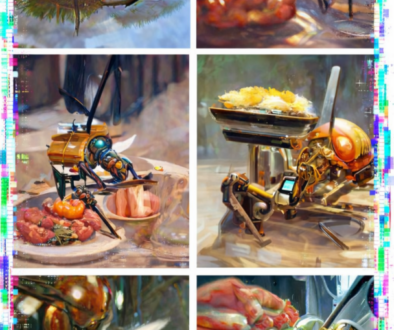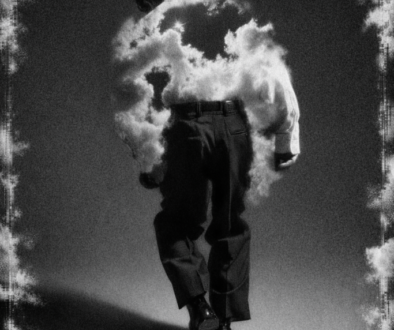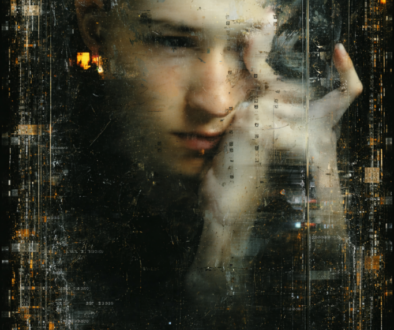


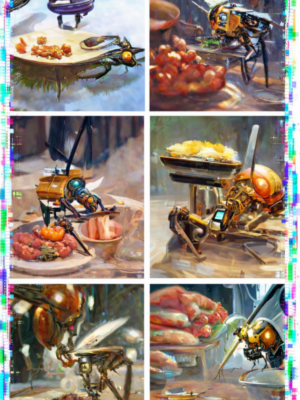
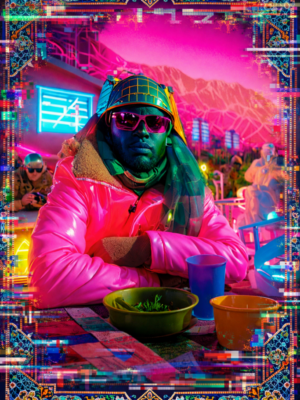
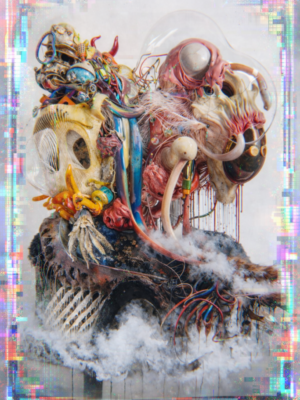


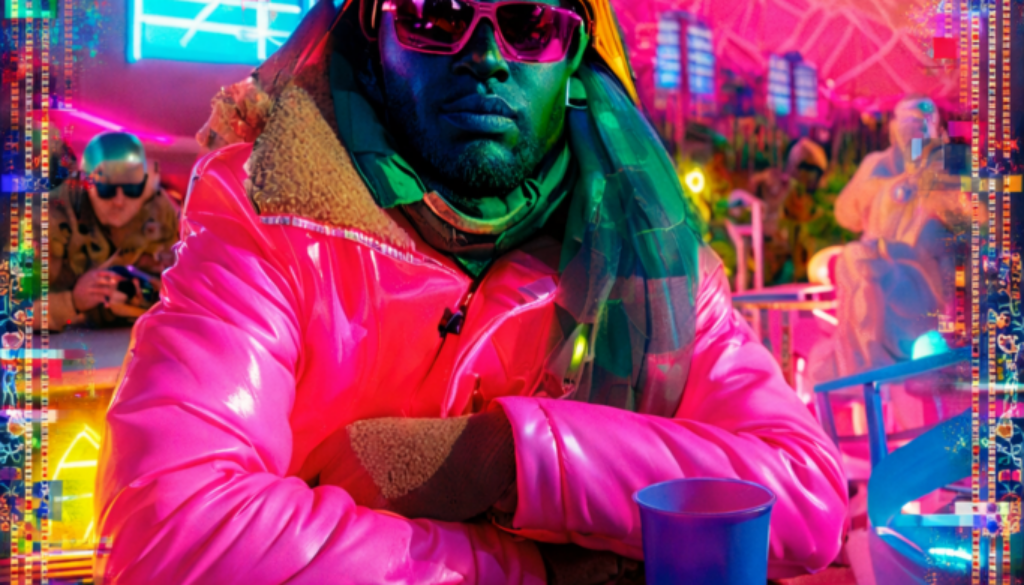

Digital Divan, presented as an Iranian Embassy in the seventh edition of The Wrong Biennale, gathers artists working across visual art, photography, animation, jewelry, sculpture, and design through artificial intelligence. The exhibition begins from a clear idea on its own site: Iranian intellectual and aesthetic traditions are not treated as closed chapters, but as material that can still move through new systems of image making. That shift shapes the entire project. The artists are not using AI to abandon history, and they are not presenting tradition as something that must remain untouched in order to stay meaningful. Older references pass into generated imagery, object design, stylized portraiture, and speculative environments. In that movement, memory stops being a fixed archive and becomes an active visual process, one that can be reshaped without being emptied out.

The artist list alone already shows how wide the field of approaches is. Ahoupa, Arash Naimian, Farhang Parsikia, Kimia Khodadadifar, Naghmeh Fakoorzadeh, Nima Nilian, Omid Iraei, Dr. Sara Yousefifar, and Visheh do not share one house style, and the project is better for that. Some pages are anchored in myth and historical continuity, some turn toward bodily transformation, some open into dream states, and others stay close to ornament, ecology, or social feeling. The result is not a narrow statement about software or a single recognizable AI look. It is a gathering of different artistic languages that keep returning to the same pressure point: how inherited forms survive once they enter a digital image world shaped by algorithmic tools, unstable surfaces, and new ways of circulating art.


Farhang Parsikia’s project gives that larger idea one of its clearest forms. His page describes a series based on Achaemenid inscriptions, but instead of simply illustrating ancient texts, he creates AI-generated films paired with researched captions, transliterations, translations, and contextual analysis. The inscriptions are treated as a living dialogue rather than static relics, and that change in approach is central to the exhibition’s logic. History does not sit at a respectful distance. It is drawn into audiovisual form, platform circulation, and contemporary visual language. The project asks how declarations carved in stone 2,500 years ago translate into algorithms, pixels, and social media networks now. That question is larger than one page or one artist. It runs through the entire exhibition as a question about how old voices continue speaking after their original medium has changed.
Jewelry and design take that same movement into a more intimate space. Kimia Khodadadifar writes about moving from painting into jewelry, turning floral motifs into wearable forms through enamel and digital design, with AI expanding visual possibilities and helping new compositions emerge. Dr. Sara Yousefifar also works through jewelry, but with a more openly mythic tone, building a collection around mythical creatures and historical figures, and describing a wish for history not only to be remembered but worn and lived. The body becomes important here, not as a neutral support for adornment, but as the place where memory is carried close, touched, shaped, and reimagined. These pages make it clear that artificial intelligence is not separate from craft inside this exhibition. It enters craft, stretches it, and gives inherited symbols another route into the present.

Ahoupa’s page shifts the exhibition into a darker emotional register by tying memory to ecological loss, death, and the wounded life of the natural world. Her text speaks of fading forests, bones buried in roots, destruction, care, decay, and rebirth, while framing Mother Earth as a force of memory and resistance rather than a passive figure. In this part of the project, memory is not only historical or ornamental. It is stored in damaged landscapes, disappearing life, and the uneasy feeling that beauty now carries grief inside it. That changes the tone of the whole exhibition. The move from older cultural forms into AI is no longer just about translation across media. It also becomes a way of dealing with loss, with the slow violence of environmental erosion, and with the need to keep feeling a world that is already changing faster than memory can comfortably hold.

Other artists turn that instability inward, toward performance, selfhood, and uncertain perception. Arash Naimian’s projects use absurdity and cinematic invention to stage memory as something fermented, theatrical, and split across multiple versions of the self. His text for one series turns preservation into surreal comedy, while another describes a carousel of identities tried on like costumes in a search for a pulse that still feels personal under all the fiction. Nima Nilian moves through another version of the same problem by blending photography, animation, and AI to create emotionally charged scenes shaped by displacement, nostalgia, and the uncanny. Omid Iraei softens the mood but keeps the tension, describing images where the human form rises from shadow into light and passes from the physical into the felt. Across these pages, memory appears as a space where reality, desire, and performance no longer stay separate.

Naghmeh Fakoorzadeh makes the issue of mediation especially direct. Her page begins with sculptures she has physically created over the years, then explains how AI allowed her to introduce new materials and textures and present those works in altered visual form. She even turns the display into a game, asking viewers to distinguish the real sculptures from the generated ones. That gesture speaks to a larger condition of seeing in the present. Many people encounter sculpture first through screens and photographs rather than through physical presence, and her work leans into that uncertainty instead of trying to resolve it. The line between reality and fiction becomes part of the artwork itself. In the context of this exhibition, that feels important not as a technical trick, but as a way of showing that memory now passes through mediation so often that authenticity has become something viewers negotiate rather than simply receive.

Visheh introduces a more openly collective horizon with a text centered on unity, revolution, and the painful need to break boundaries in order to move toward social change. Her contribution widens the emotional field of the exhibition. Memory is no longer only personal, mythic, or environmental. It becomes social and future-facing, tied to the question of how people hold together when old forms no longer do the job. Read beside the other artists, her page adds another meaning to transformation. Change is not just a matter of style, medium, or symbolism. It can also be a matter of common life, of what people are willing to let go of and what they still hope to build together. That makes the Iranian frame of the project feel more alive and less ceremonial, connected to unfinished collective feeling rather than sealed national display.

What lingers after moving through these pages is not a neat message about technology, nor a simple contrast between the past and the future. The exhibition leaves behind a more difficult impression than that. It suggests that memory is never safe once it enters the present, but it also suggests that safety is not the goal. The goal is contact. Contact with older forms, with damaged environments, with unstable selves, with myths that refuse to disappear, and with images that keep changing as soon as they are made. Artificial intelligence becomes part of that contact only when it is treated as a medium with consequences rather than a shortcut to novelty. The exhibition understands that clearly. It makes room for unease, contradiction, and unresolved feeling, and in doing so it lets cultural memory remain fully alive instead of cleanly preserved.