




Most people see a corrupted image, frozen video, or broken signal and immediately look for a way to fix it. Rosa Menkman does the opposite. She pauses, studies the failure, and asks what it can reveal. The Dutch artist has built much of her career around the strange visual moments that appear when technology stops behaving as expected. Pixels stretch, colors split, images repeat, and recognizable forms begin to dissolve. Instead of treating these effects as useless mistakes, Menkman turns them into the starting point for artworks about how digital media is created and controlled. Her practice shows that the screen is never as smooth or reliable as it appears. Beneath every clean image is a complicated system that can break, distort, and unexpectedly create something new.

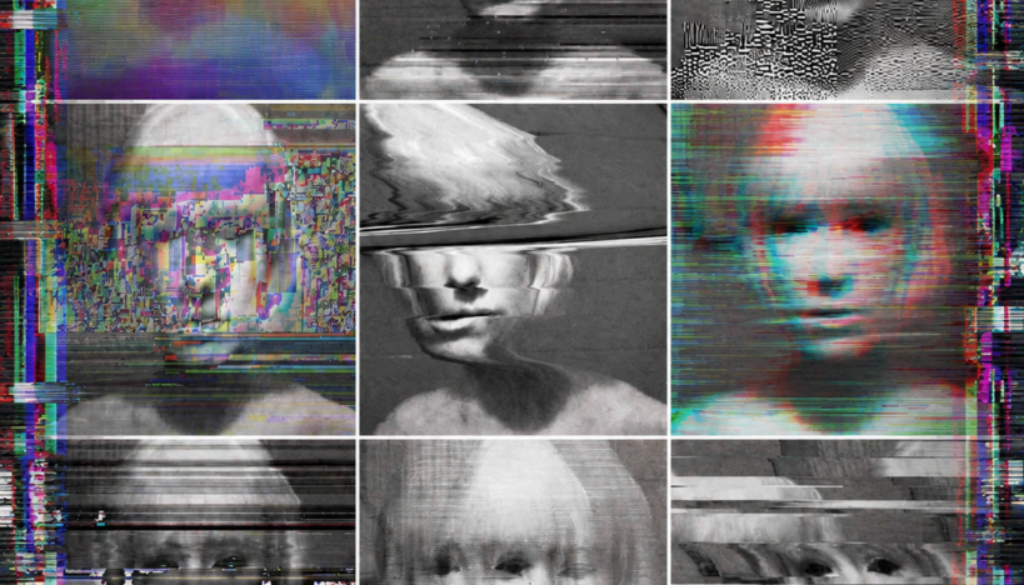
Menkman is often described as a glitch artist, but her work goes far beyond the familiar look of distorted faces, neon colors, and fragmented screens. She is interested in what causes an error and why one technology breaks differently from another. A damaged video signal produces a different image from a corrupted photograph, and a failed file format leaves different traces from a compression problem. These differences are important to her. She treats each type of malfunction almost like its own visual language, with a unique set of shapes, movements, and colors. Her work asks viewers to look past the surface of an image and consider the hidden processes behind it. The glitch is not simply an effect added at the end. It is evidence of what the technology is doing underneath.

Digital images often feel effortless. A photograph appears instantly on a phone, a video streams without interruption, and files move between devices with little visible effort. Menkman’s work reminds us that none of this is automatic. Every image depends on rules that determine how it is recorded, compressed, saved, and displayed. Most of the time, those rules remain invisible because everything works as planned. When a system fails, however, those hidden decisions suddenly become easier to see. A section of the image may disappear, repeat itself, or turn into a block of unexpected color. Menkman uses these moments to show that digital media is not neutral. It is shaped by technical choices that influence what remains visible, what gets removed, and what is considered acceptable.
In A Vernacular of File Formats (2010), Menkman explored what happens when different types of digital files are deliberately disrupted. The project presented a range of visual errors, including broken patterns, unusual color shifts, fragmented images, and repeated sections. Each result came from the structure of a particular format, which meant the damage was not completely random. The technology responded according to its own rules. Menkman treated these responses almost like a collection of dialects, with each file type producing its own recognizable marks. The project made something usually hidden feel immediate and physical. A file format was no longer just a technical detail behind an image. It became an active part of the artwork, shaping the final result alongside the artist.
There is also something emotional about the way Menkman’s images break apart. A face or landscape may remain visible, but only partially. Some details disappear while others become exaggerated or repeated. The image seems caught between recognition and complete collapse. That unstable feeling reflects the way people experience digital technology every day. Files seem permanent until they no longer open. Devices feel reliable until an update makes something incompatible. Photos can be copied endlessly, yet they still depend on systems that may become outdated. Menkman brings that uncertainty to the surface. Her work makes digital images feel fragile, temporary, and unpredictable. The damage does not simply destroy the picture. It changes how the viewer relates to it, creating a mixture of curiosity, tension, and loss.
Menkman also looks closely at technologies that have been replaced. In The Collapse of PAL (2011), she examined the fading presence of the PAL television system, an analogue broadcast standard once used across much of Europe. Newer technology often arrives with the promise of better quality, greater speed, and clearer images, but Menkman is interested in what disappears during that transition. Old systems have their own textures, sounds, limitations, and visual habits. When they are abandoned, a particular way of seeing can disappear with them. Her work does not suggest that older technology was necessarily better. Instead, it questions the idea that technological change is always a simple story of improvement. Progress can also create forgotten formats, inaccessible media, and images that can no longer be experienced in their original form.

This interest in what gets lost also appears in Menkman’s criticism of the constant push toward higher resolution. Screens are regularly sold through promises of sharper detail and greater clarity, as though more information always produces a better image. Menkman challenges that assumption. High resolution can make an image look more realistic, but it can also hide the technical decisions behind it. Compression, filtering, and software adjustments may disappear beneath a polished surface. By focusing on blur, noise, distortion, and missing details, Menkman invites viewers to notice what perfect clarity leaves out. Her work suggests that an imperfect image can sometimes reveal more than a flawless one. A broken edge or corrupted section can show how the image was built and what the system decided to preserve.
In DCT. The 1000000th (64th) Interval (2015–2017), Menkman explored the processes used to compress and reorganize digital images. Compression usually happens quietly in the background, allowing files to become smaller and easier to store or send. Menkman turns that invisible process into the subject of the work. She shows how images are divided, simplified, and reconstructed according to technical rules. Some details are treated as important, while others are removed or changed. The process is not simply about making a file smaller. It also shapes what the viewer eventually sees. By making compression visible, Menkman reveals that every digital image is the result of choices. Even ordinary photographs carry the influence of systems that decide which visual information should survive.
Glitch art has become familiar in advertising, music videos, fashion, and social media filters, but Menkman remains cautious about treating it as just another style. An error can feel exciting when it interrupts something familiar, but that effect can disappear once the same distortion is repeated everywhere. A glitch that once exposed a broken system can quickly become a polished design choice. Menkman’s work continues to move beyond recognizable visual effects because she is less interested in copying the appearance of failure than in understanding the conditions that produce it. Her practice asks whether an error still has meaning once it becomes predictable. The most interesting glitches in her work are not simply attractive. They force viewers to reconsider how technology shapes images, habits, and expectations.
Rosa Menkman has helped turn digital failure into a way of thinking about the world behind the screen. Her work shows that an error can be more than an interruption. It can uncover the structure of a file, preserve the memory of an outdated technology, or expose the limits of a system that usually appears reliable. The broken images she creates are not celebrations of chaos for its own sake. They are invitations to look more carefully at the tools people use every day. By paying attention to damaged signals, missing information, and unstable formats, Menkman reveals the creative possibilities hidden inside technical problems. In her work, failure does not close down an image. It gives the image another direction and opens a space where something unexpected can begin.