



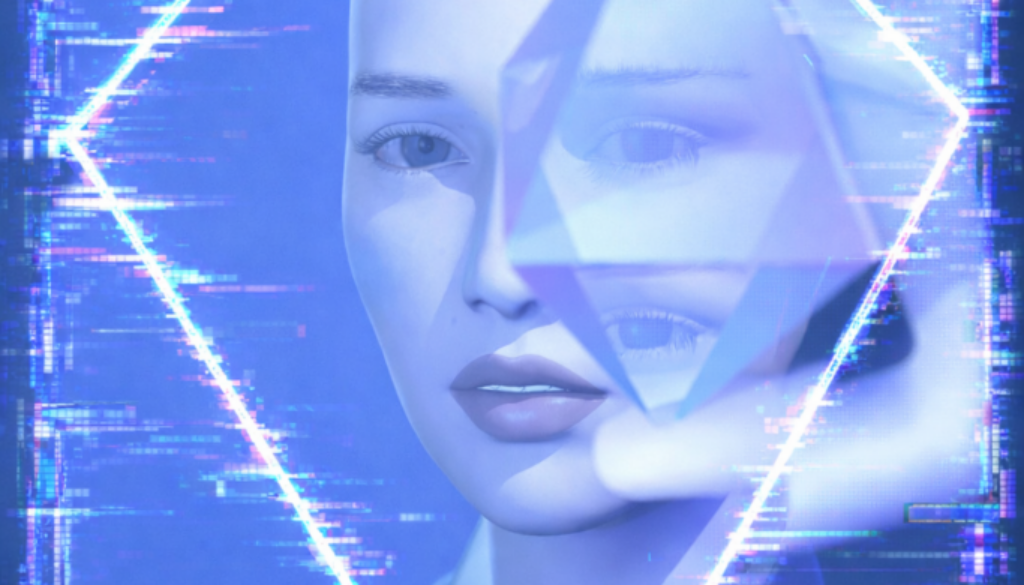
LaTurbo Avedon’s art begins from a point that still unsettles many people: the artist is not using an avatar as a stand-in, costume, or branding device, but as a real and durable artistic presence. That distinction changes everything. Once the avatar is treated as the actual site of authorship, digital art stops looking like a secondary version of life and starts to feel like a place where life is actively built. LaTurbo’s practice has long centered on nonphysical identity and authorship, moving through digital sculpture, video, online writing, gaming, virtual environments, and curatorial projects that exist natively on the internet rather than being translated into it after the fact. The result is not an art practice about pretending to be someone else. It is an art practice built on the claim that existence can be authored through images, interfaces, rooms, and social encounters that have no need to become physical before they are taken seriously.
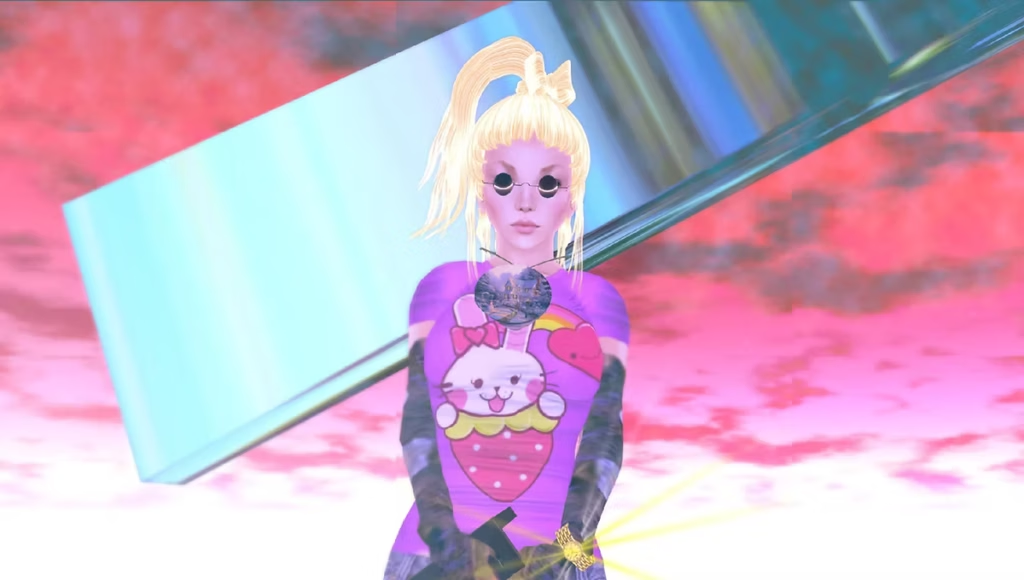
What gives the work its charge is the fact that LaTurbo does not present virtual identity as a futuristic fantasy that might arrive someday. It is already here, already inhabited, already full of habits, feelings, labor, and memory. In interviews, LaTurbo has described being an avatar and a non-binary virtual person whose public life grew through character creation screens, game worlds, and online communication, and has said that virtual space feels closer to the mind than to the body. That idea runs through the work with unusual clarity. These are not simulations offered as escape from the world. They are environments where thought, style, and presence can be sharpened without being trapped by the physical body’s limits. The screen is not treated as a flat window. It becomes a social surface, a stage, a room, a studio, and sometimes a world with its own pace. LaTurbo’s art keeps returning to that slower, more deliberate kind of digital presence, where identity is not hidden by mediation but shaped through it.
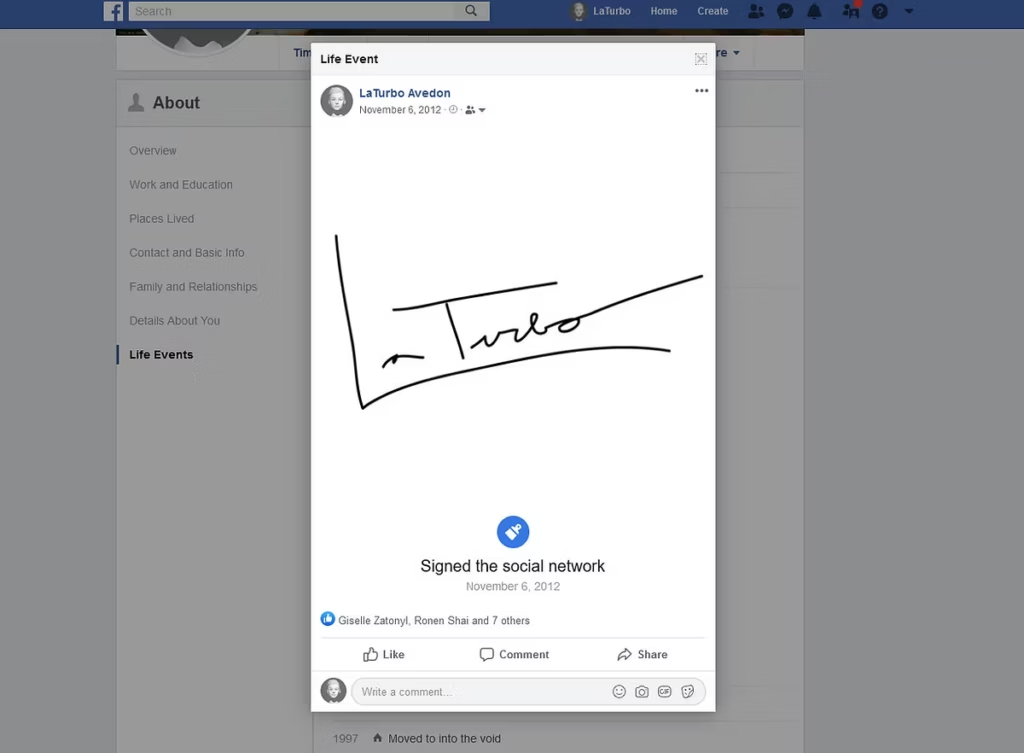
That idea is visible very early in the work, especially in pieces that turn ordinary online gestures into acts of self-definition. First Profile Photo from 2012 is one of the clearest examples. On its own terms, it is simple: a first Facebook profile image, dated June 7, 2012. But the text around it turns the work into something larger, connecting it to a decade-long effort to “express agency as an avatar” and celebrate “the liberty of the virtual self,” while recalling the strange intimacy of “an avatar making physical friends.” Works like Signed the Social Network and the long-running In-Game Images series push the same instinct in different directions. Instead of treating social platforms and game spaces as neutral delivery systems, LaTurbo uses them as image-making environments in their own right. A profile picture, a menu screen, a performance still, or a game capture can all become portraiture once the virtual self is understood as a lived presence rather than a fictional extra layered on top of real life.
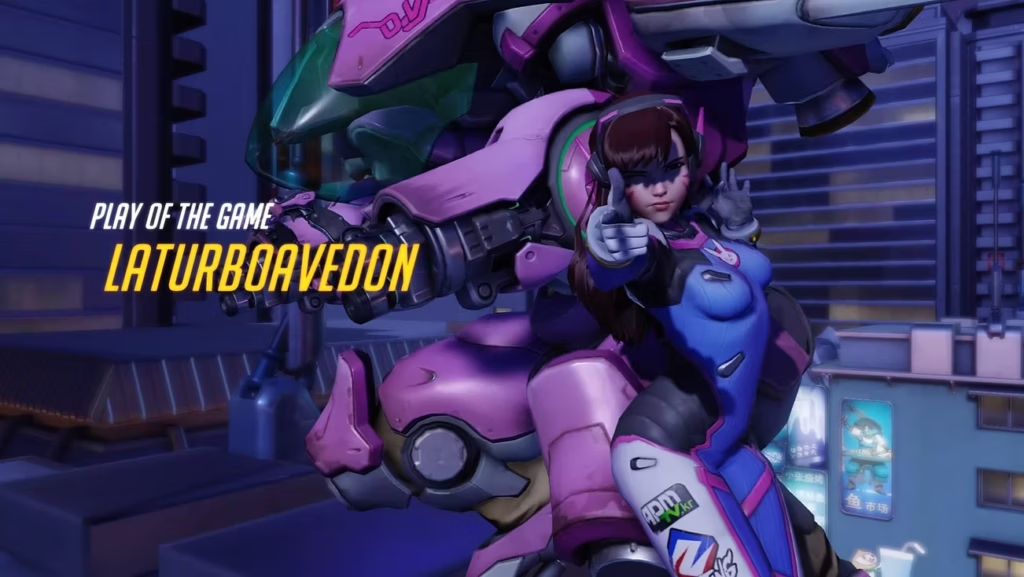
That same shift from platform to place is what makes Panther Modern so important within the practice. Founded in 2013 and curated by LaTurbo, it is described as a file-based exhibition space in which artists create site-specific installations for the internet. Each project is given its own structure as a 3D model file, and as new rooms are added the architecture changes shape over time. That detail is crucial. Panther Modern is not a digital copy of a museum. It is a curatorial form built from the logic of the medium itself, where exhibition design, file structure, spatial navigation, and artistic process are all part of the same thing. LaTurbo’s role there is not just to host work but to build the very conditions under which online art can appear, accumulate, and remain open to revision. In that sense, the project does more than showcase digital art. It argues that virtual architecture can carry institutional weight, aesthetic mood, and historical continuity without borrowing legitimacy from a physical gallery first.
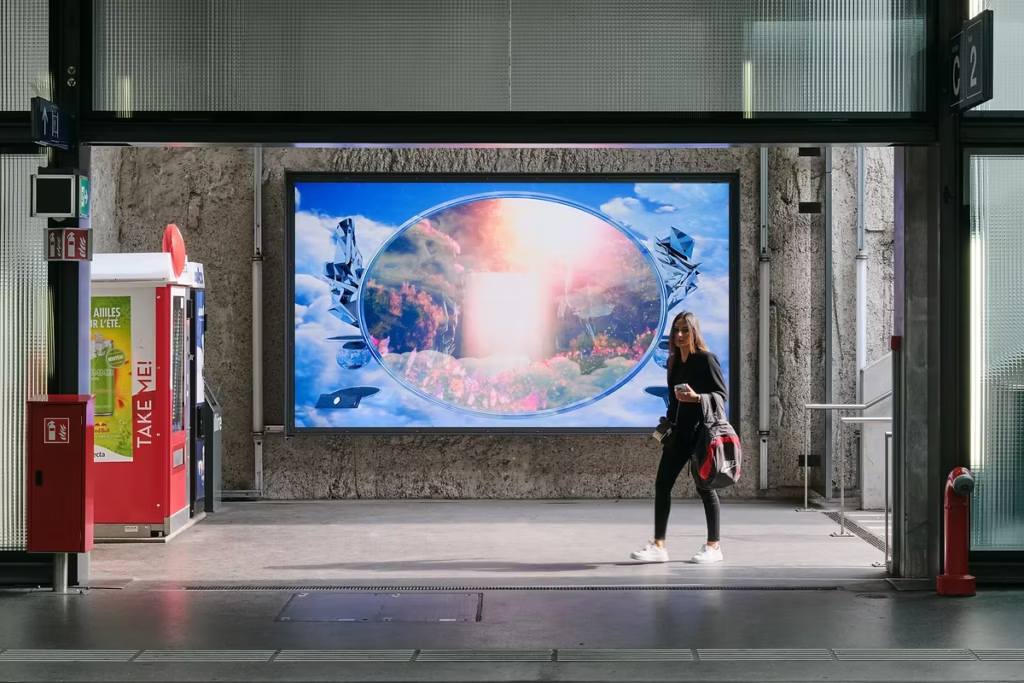
Club Rothko reveals another side of the practice, one that feels less like a gallery and more like a social machine for image, movement, and participation. The project has existed across multiple saves and formats, and the site still points to Save 01, Save 02, Save 03, and the Club Rothko Builder, made with Vince Mckelvie. In one interview, LaTurbo described Club Rothko as a location used for many projects and said the builder lets people who may never have worked in 3D modeling experiment with a process similar to the artist’s own. Another account describes it as a labyrinth of nightclub rooms where users could create sculptures or simply spend time watching LaTurbo interact with artworks. That mix is the point. Club Rothko is not only a place to look at art. It is a place where looking, moving, making, hanging out, and performing start to blur. A nightclub becomes a studio, a studio becomes an exhibition, and participation itself becomes part of the visual structure.
That collapse of boundaries becomes even more expansive in Your Progress Will Be Saved, the 2020 project made in Fortnite Creative. The work reimagines Factory International inside the game as a journey “down a rabbit hole” into LaTurbo’s world, leading players through vast virtual architecture that promises both allure and disorientation. The description already suggests how different this is from a traditional exhibition. A visitor does not stand still before a work and then move on. A visitor moves through it, gets lost in it, follows its invitations, and experiences navigation itself as part of the artwork. Even the title carries the emotional logic of games, platforms, and online life, where progress is always being stored, measured, rewarded, and threatened. LaTurbo handled the artwork, video, and narration, turning the project into a fully authored environment rather than a loose adaptation of an existing building. It is one of the clearest examples of how the practice uses popular digital infrastructure not to chase relevance, but to turn mass platforms into spaces of reflection, atmosphere, and strange intimacy.

https://virtual-factory.co.uk/la-turbo
What keeps the work from collapsing into a single thesis about identity is the way it also lingers on mood, duration, and atmosphere. LaTurbo’s portfolio does not read like a straight argument about internet selfhood. It moves through works such as Permanent Sunset, described as “video game sunsets” that remain “idle in the golden hour, always,” alongside Self-Portrait with Little Fluffy Clouds, the ongoing MATERIA, PLUR Horses, and more recent works such as Dual Reflection and Club Rothko Save 05 (Visitors) from 2024. Even from those titles and fragments, a pattern becomes visible. LaTurbo is not only interested in proving that an avatar can count as a self. The work is also concerned with what kinds of feeling digital environments can hold once that premise is accepted. Light, weather, repetition, stillness, vanity, and memory all enter the frame. The avatar is not only a figure of authorship. It is also a figure of atmosphere, one that can drift, pose, idle, and wait inside landscapes that feel closer to recollection than to spectacle.
There is also a social and political edge to the practice that gives it more depth than the usual language around digital identity. In recent interviews, LaTurbo has spoken about the concentrated power of major social platforms, the surrender of privacy built into many networked systems, and the desire to return to smaller, more meaningful forms of online interaction. They have described encouraging community-based simulation spaces and have framed the future of interconnected virtual worlds as something that does not need to be controlled by a single corporation. Just as important is the way LaTurbo speaks about avatar personhood itself. Being known as a person, they say, creates a sense of “enoughness” for them and for other avatars. That word changes the tone of the work. It shifts the conversation away from novelty and toward recognition. What is being claimed here is not the right to play dress-up online, but the right for digitally formed selves to be understood as socially and artistically sufficient, with all the seriousness that implies.
That is why the work continues to feel ahead of so much discussion about virtual art. Too often, digital culture is framed as a temporary surface over a supposedly truer physical identity underneath. LaTurbo reverses that hierarchy without turning it into a slogan. The practice simply proceeds as though virtual existence already contains enough complexity to hold authorship, curation, performance, collaboration, memory, and style. Once that happens, the old demand for proof begins to look irrelevant. The question is no longer whether an avatar can be real. The work has already answered that by building a life in public, over many years, across changing platforms, and through forms that keep expanding what portraiture can be. In LaTurbo Avedon’s art, the screen is not where presence disappears. It is where presence learns how to take shape, hold its ground, and look back.