For a long time, TV drama ran on an unspoken safety rule: the main character might suffer, but the show would not take them away in a way that truly rearranged the whole machine. Network procedurals and long-running hits could get dark, but they also had to come back next week with the same familiar center, because that is how audiences were trained to watch. When a character died, it was usually a guest star, a villain, or a tragedy designed to spotlight the lead’s feelings without changing who the show belonged to. Even when serialization started creeping in during the 1990s, the “reset button” was still the house style, especially on broadcast, where syndication and week to week accessibility mattered. What changed was not simply that writers got braver, but that TV itself started selling a different promise: instead of comfort, it would sell commitment. It would ask you to follow a story like a novel and trust that the payoff could be messy, unfair, or brutal because that is what consequence looks like. This is where prestige TV begins to matter, and why a single HBO show ends up feeling like the start of a new era. The point was not gore, or surprise for its own sake. The point was to make the viewer feel that the story could bite the hand that loved it, so every conversation, every alliance, and every so called turning point had real stakes. By the time audiences were fully trained, the death of a major character was no longer a rare event. It was a structural tool, one that could reset power, shift tone, and even change what kind of show you thought you were watching.
The Sopranos is where that tool gets sharpened into something that feels modern. It is not the first series to kill someone important, but it is one of the first to make the audience complicit in the idea that death is not a moral ending, it is a business decision inside the world of the story. Early on, the show builds a strange intimacy with Tony Soprano, letting you live with him as a father, a boss, and a man who lies to himself as easily as he lies to everyone else. That intimacy makes the killings hit differently because they do not come with the old TV sense of balance. When Big Pussy is exposed and executed in the season 2 finale, the scene lands as a kind of emotional betrayal that the show refuses to soften, and that episode aired on April 9, 2000. Later, when Adriana is killed in season 5’s “Long Term Parking,” the show chooses cruelty that feels intimate rather than flashy, and that episode originally aired May 23, 2004. The reason this matters to the history of TV death is that the show is not just removing characters, it is removing illusions. It takes the person closest to the audience’s softer feelings and shows you what the world actually does to softness. Then the series ends by doing something even more influential: it refuses the old kind of closure. The finale “Made in America” first aired June 10, 2007, and its cut to black effectively turns the question of Tony’s survival into a permanent argument, a way of making the audience sit with the idea that the story never promised safety or resolution in the first place. In that sense, the show does not only kill characters. It kills the viewer’s expectation that the lead is protected by the camera.
Once that door is open, network television starts proving it can do it too, and in a way that reaches huge audiences. A major early example is NYPD Blue, which had already pushed realism and roughness into prime time, then chose to end Detective Bobby Simone’s story in “Hearts and Souls.” That episode aired November 24, 1998, and it made his death into a full hour and a half of grief, memory, and spiritual drift, not a quick plot point to clear the board. What is important about that move, historically, is that it told viewers a core character could be removed and the show could keep going, even if the audience hated it. Then ER does something similar on an even bigger stage. Dr. Mark Greene was not just another doctor, he was one of the faces people associated with the entire series, and the show walked him toward the end in a way that felt patient and human rather than sensational. His final episode, “On the Beach,” aired May 9, 2002, and it framed death as the end of a long relationship with the viewer, not a twist. In both cases, you can see the industry learning that audiences will not automatically leave if you hurt them. Sometimes they stay because you hurt them, because the pain feels like proof that the story is not lying.
Around the same time, suspense driven serialized TV starts using major deaths as a kind of engine, especially in season finales where viewers were already conditioned to expect escalation. 24 becomes a landmark here because it takes the real time gimmick and turns it into emotional brutality. After a season that constantly insists everything is urgent and personal, it ends by killing Teri Bauer, and even fandom summaries flag it as a main cast member killing another main cast member, with Nina Myers killing Teri at the end of Day 1. The point was not only shock. It was to prove that the show’s stakes were not performative. It was willing to leave its hero with a wound that could not be reversed next week, and it trained audiences to treat finales as danger zones for people they assumed would be safe. That training carries straight into other big serialized hits of the 2000s, where death becomes both a narrative weapon and a conversation starter. Fans begin to watch with forums in mind, with post episode autopsies, with the expectation that a death is not just an ending but a clue about what kind of story this is. It is also the era where writers start balancing two pressures at once: keeping long arcs coherent while still delivering moments that feel irreversible. Character death becomes the cleanest form of irreversibility. You cannot undo it without breaking trust, and by this point trust has become the currency of prestige storytelling.
Then comes The Wire, which pushes the idea into a different direction by making death feel almost offensively ordinary. Where some shows treat a major death like fireworks, The Wire often treats it like paperwork, something that happens quickly and leaves behind confusion, gossip, and institutional shrugging. The series is about systems, so death becomes one more way the system grinds people down, no matter how much the audience likes them. Wallace’s murder in season 1 is a key early lesson, and the episode tied to that arc, “The Cost,” aired August 11, 2002. The way the show handles it matters historically: it makes you understand that in this world, being young or decent or scared does not protect you, and the consequences ripple through the neighborhood like poison. Later, the series does something even more subversive with a fan favorite like Omar, showing that even legend can end in a moment that is not heroic, not staged for maximum catharsis, and not treated as culturally important by the institutions around it. That is a different kind of “death of the hero” than the one people usually mean. It is not only about surprise. It is about refusing to let the audience turn a character into a myth the story must respect. In the broader history, The Wire helps prove that killing major characters can be less about spectacle and more about worldview. It can be the show saying, flat out, that the world does not care who you are.
By the time Breaking Bad reaches its late seasons, the audience is fully trained for consequence, and the show uses death to lock the moral argument in place. Walter White’s story is about transformation, but the show never lets that transformation stay abstract. It keeps demanding payment. Hank Schrader’s death in “Ozymandias” is the bill coming due, and that episode aired September 15, 2013. Historically, this is a big moment because it is not a side character death meant to raise stakes. It is a death that makes the entire series reframe itself, turning Walt’s “control” into a joke and forcing the audience to confront what the story has been building toward all along. Around that same period, The Walking Dead uses death as a different kind of mechanism, less moral accounting and more survival horror design. The season 7 premiere, “The Day Will Come When You Won’t Be,” originally aired October 23, 2016, and it features the final regular appearances of Glenn and Abraham, both killed by Negan. The importance of that case is that it shows how the tactic can become weekly architecture. Death is not an occasional earthquake. It becomes weather, a way to keep fear alive in a long running apocalypse narrative where the real enemy is the audience getting comfortable.
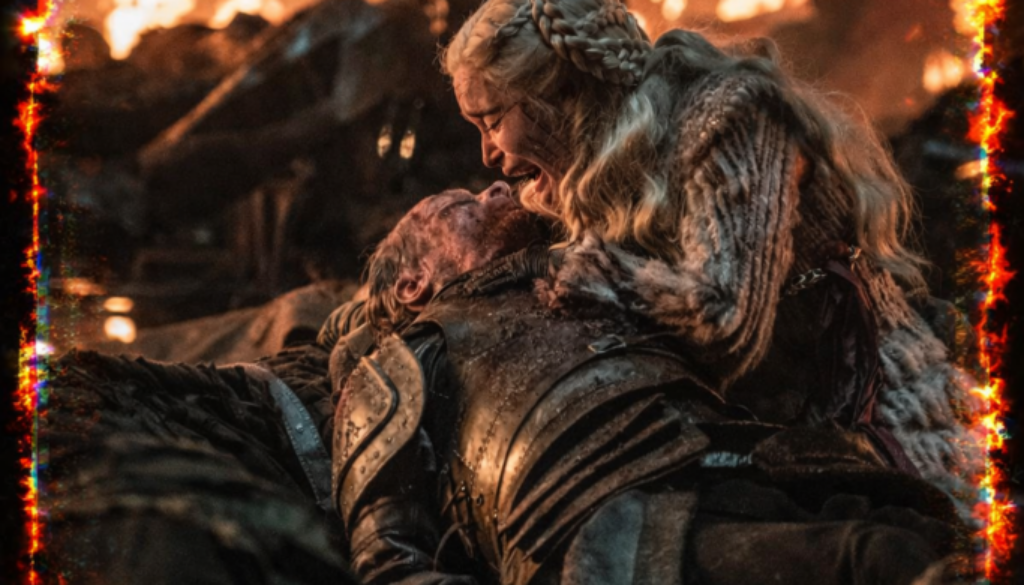
Game of Thrones is where all these lessons go fully mainstream and get absorbed into pop culture at scale. It takes the prestige rule set, applies it to fantasy, and then dares viewers to keep believing in plot armor. Ned Stark’s execution in “Baelor,” which first aired June 12, 2011, is not simply a shocking moment, it is a contract rewrite delivered in public. After that, the show can threaten anyone, and the audience watches every storyline with a new kind of paranoia. Then the Red Wedding arrives as the era’s signature trauma, centered in “The Rains of Castamere,” which first aired June 2, 2013, and proves the show can erase a whole political future in minutes. In historical terms, this is the point where “major character death” becomes a cultural event machine. Reactions go viral, spoilers become social currency, and viewers start treating survival as the real twist. The hero is no longer the person the story protects. The hero is the person who lasts until the story decides they do not. That is the final shift. Television did not just learn that it could kill its leads. It learned that audiences would build their own meaning out of that loss, and that meaning would often be sharper than anything a tidy ending could provide. It is a colder kind of storytelling, but it is also a more honest one, because it admits what old TV used to hide: sometimes the story does not reward the person you rooted for. Sometimes it rewards the truth that rooting was never protection.