





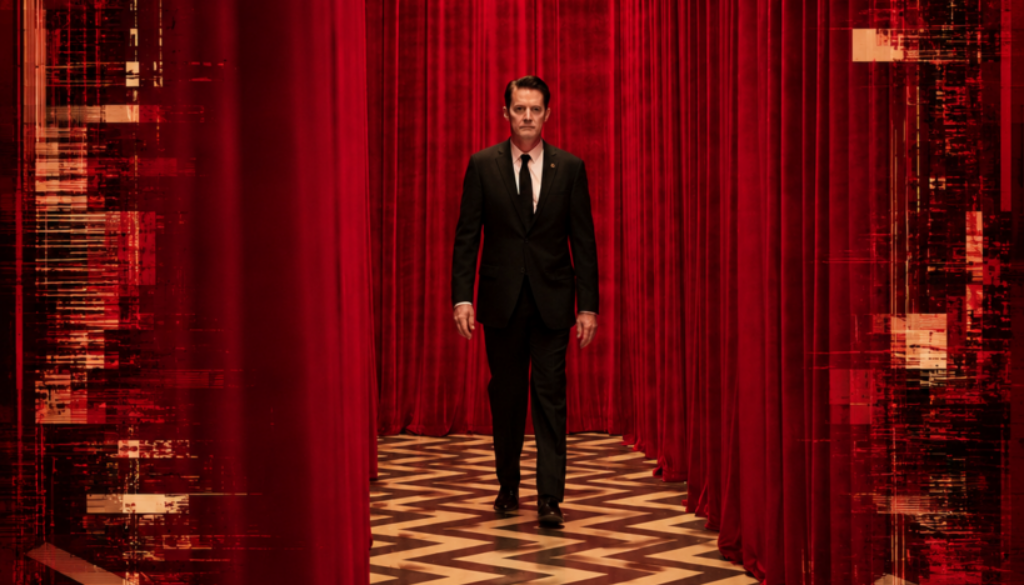
Twin Peaks (1990) arrived as a murder mystery, but it quickly became something larger and stranger than the shape it first seemed to wear. Created by David Lynch and Mark Frost, the series begins with the death of Laura Palmer, a teenage girl whose body is found near a quiet logging town in Washington. That premise could have led to a familiar crime story, with clues, suspects, revelations, and a final answer neatly closing the wound. Instead, the show used that mystery as an opening into grief, secrecy, performance, dreams, desire, and fear. It treated television not as a simple container for plot, but as a place where different forms could collide, distort, and grow into something new.
Before the series, American network television often moved through stable formats that trained the audience to expect clear rhythms. A police procedural had its investigation, a soap opera had its betrayals and romances, a sitcom had its comic timing, and a supernatural story had its own separate space. The show brought those languages together without smoothing out the differences between them. A scene could begin like a melodrama, turn into absurd comedy, become a detective sequence, and then slide into horror without warning. That movement gave the screen a new kind of instability. Viewers were not only following a story, they were learning how to watch a world where tone itself could become part of the mystery.

The series understood soap opera better than many works that looked down on it. It used love triangles, family secrets, business schemes, exaggerated reactions, and dramatic reversals, but it did not treat them as disposable pleasures. Instead, it pushed them into a stranger emotional register, making their excess feel both funny and tragic. The fictional show watched by characters inside the series, Invitation to Love, turns television into a mirror, showing a melodrama inside another melodrama. That layering makes the audience aware of the form without breaking its spell. The screen seems to ask why people are drawn to secrets, betrayal, romance, and suffering, while still giving those pleasures full dramatic force.
Dale Cooper’s investigation also changed what a television detective could be. He is sharp, observant, and serious about justice, but he is also guided by dreams, intuition, pleasure, and odd ritual. His love of coffee, pie, trees, and small details gives the investigation a warmth that pushes against the darkness around him. He does not only collect evidence, he listens to atmosphere. In a more ordinary crime show, clues would lead in a clean line toward a solution. Here, the clues open sideways, through red curtains, backward speech, symbols, visions, and emotional echoes. The detective story becomes less about control and more about entering a place that refuses to be fully explained.

That refusal helped television become more comfortable with ambiguity. The show did not present strangeness as decoration placed on top of a normal story. Its surrealism came from the same emotional ground as its grief and violence. The Red Room, the owls, the woods, the traffic light at night, the Log Lady’s warnings, and the strange pauses between lines all feel connected to the town’s buried pain. These images do not always explain themselves, but they are never empty. They give shape to things that ordinary dialogue cannot hold. Television had often depended on clarity, but the series showed that confusion, silence, and symbolic pressure could create a deeper form of attention.

Its use of pacing was just as important. Many scenes move slowly, allowing gestures, objects, music, and spaces to gather power. The camera lingers on rooms, roads, trees, faces, food, and empty air until they seem charged with hidden meaning. A character entering a diner, a song playing in a bar, or wind moving through the forest can feel as important as a plot reveal. That patience changed how atmosphere could function on television. The show trusted mood as structure, not as background. It let viewers sit inside unease before telling them what to think, and that patience opened space for later series to become more novelistic, elliptical, and visually controlled.
The sound of the series also helped reshape what television could feel like. Angelo Badalamenti’s music gives the town its emotional temperature, moving between romance, sadness, dread, and dream. The score does not merely support scenes, it often seems to breathe through them. A soft melody can make a moment feel tender, then become painful when placed beside violence or denial. The contrast between beauty and horror gives the show its lasting ache. Sound design, silence, and music become ways of revealing hidden pressure beneath ordinary life. In that sense, the series made television feel less like filmed dialogue and more like a complete sensory environment.

Its influence can be felt across decades of television that became more willing to trust mystery, mood, and formal risk. Later shows learned from its use of long-form storytelling, damaged communities, symbolic images, strange humor, and central mysteries that open into questions larger than plot. It helped prepare audiences for television that did not resolve everything quickly, television that invited theories, rewatches, and emotional interpretation. The show did not invent complexity on the small screen by itself, but it made a public case for it in a way that could not be ignored. It showed that a network series could be popular, funny, frightening, stylish, and deeply odd at the same time.

The most important shift was not only that television became stranger afterward. It was that strangeness could be treated as serious artistic language. The series made room for a kind of storytelling where dreams could sit beside jokes, horror could sit beside romance, and a murder investigation could become a study of an entire medium watching its own habits. It expanded the emotional and formal vocabulary available to television creators, giving them permission to leave certain doors open. Its legacy is not just a list of shows that followed its path. It is the feeling that the screen can still hide a room behind the room, and that stepping inside may change how we watch everything after.