





Rosalía’s Motomami (2022) is built like a body that refuses to stay still. It moves through speed, softness, desire, faith, humor, fame, noise, silence, and sudden emotional turns without trying to make all of those parts behave. The album does not present Rosalía as one clean image. It presents her as someone changing shape in front of us, sometimes with control and sometimes with risk. That is where its sense of identity begins. The record feels like a portrait made from fragments: a voice close to the ear, a hard beat, a private wound, a joke, a prayer, a pose, a sudden break. Nothing stays in one place for long, and that movement becomes the point.

The title already tells us that this identity is split. “Moto” brings the feeling of speed, pressure, danger, metal, engine heat, and forward motion. “Mami” brings something more intimate, feminine, playful, sensual, protective, and emotionally open. Put together, the word creates a character who does not need to choose between being hard and being soft. She can be both at the same time. That is one of the album’s clearest ideas: a woman can be aggressive, tender, funny, sexual, spiritual, wounded, stylish, and strange without having to explain why those sides belong together. The title is not just a name. It is a small map of the album’s personality.
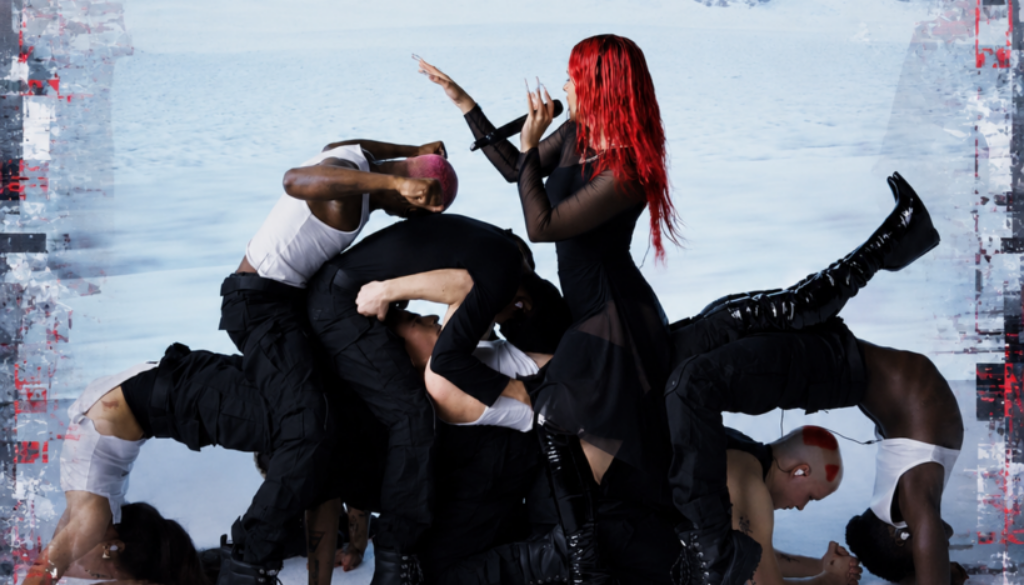
That split keeps the record from becoming a normal self-portrait. A normal self-portrait freezes a person in place, but this album keeps changing the frame. Rosalía can sound untouchable in one moment and exposed in the next. She can turn confidence into armor, then drop that armor for a voice that feels almost bare. The songs do not erase the version that came before. They stack new versions on top of it. That is why the album feels so connected to the way identity works now, when a person can be seen through images, videos, private messages, public statements, rumors, performances, and small fragments that never tell the whole story by themselves.

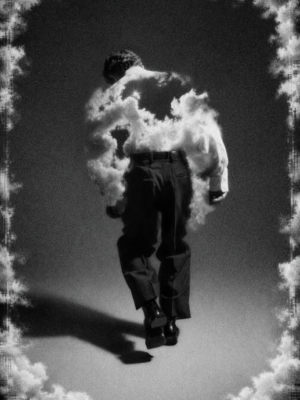
The butterfly gives that constant change a symbol. It appears as an image of transformation, but not as something simple or pretty. A butterfly is delicate, but it is also proof that one form has been left behind. That fits the album’s movement. Rosalía sounds like an artist stepping out of the shape people expected from her, but she does not land in one final version of herself. She keeps changing. The butterfly suggests beauty, but also exposure. It suggests freedom, but also fragility. In the world of the album, transformation is not a clean ending. It is a state of motion, a way of staying alive by refusing to become fixed.
That idea becomes very clear in “Saoko,” where the song seems to rebuild itself while it plays. It starts with the weight and bounce of reggaeton, but it quickly becomes something stranger and less predictable. Jazz drums, sharp piano, heavy bass, and sudden breaks push the track away from a straight genre exercise. The song feels like an engine, a club track, a jazz interruption, and an experimental pop statement crashing into each other. It does not treat genre like a box. It treats genre like material to be bent and reshaped. That movement matches the album’s idea of identity: not pure, not stable, not easy to label, but alive because it keeps mutating.

“La Fama” shows the same freedom in another way. The song uses bachata as a base, but surrounds it with a polished pop surface and the cool, nocturnal presence of The Weeknd. It keeps the sway and drama of bachata, while making the song feel glossy, distant, and almost dangerous. That fits the story it tells about fame as something seductive and harmful. Fame is treated like a lover that pulls you in, flatters you, uses you, and leaves a mark. The genre mix is not random. The sound helps create the character of fame itself, something warm enough to desire and cold enough to fear. The album keeps turning style into emotion like that.
The record often moves like a feed instead of a diary. A diary usually feels private and ordered, like someone trying to understand themselves on a page. A feed is faster and more unstable. It jumps between moods, images, bodies, jokes, songs, memories, and performances. The album follows that kind of rhythm. One moment feels made for spectacle, another sounds like a private confession. Some songs arrive with impact and leave quickly. Others open a softer space before the next shift cuts through. That movement can feel scattered, but it never feels careless. It captures a world where the self is often shown in pieces before anyone has time to see the whole.
Rosalía’s voice is one of the main reasons that fragmentation feels human instead of cold. She can sound close, playful, processed, distant, commanding, fragile, and theatrical, sometimes within the same stretch of music. The voice keeps changing its distance from the listener. At times, it feels like she is speaking directly into your ear. At others, it feels like she has turned herself into an image and is watching herself from the outside. That movement between closeness and performance gives the album its tension. It understands that being seen can be powerful, but it can also trap a person inside a version of themselves that other people want to keep consuming.

The album’s femininity is just as restless. Rosalía does not treat softness, beauty, power, or desire as fixed roles. She lets them move around. Softness can carry force. Confidence can hide loneliness. Desire can sit beside faith. Humor can protect pain. The “mami” side of the album is not only gentle, and the “moto” side is not only tough. Both are more complicated than that. Together, they create a kind of femininity that does not need to be smooth or easy to read. It can be loud, tender, vulgar, elegant, spiritual, physical, and self-aware. The album gives that messiness room to breathe instead of cleaning it up.
Under all the motion, there is also pressure. Rosalía sounds aware of what it means to be watched, desired, judged, copied, and misunderstood. The record carries the thrill of reinvention, but it also carries the exhaustion that can come with always having to change before the world catches up. That is why its confidence feels interesting. It is not simple bragging. It feels like a way to stay free, a way to stay ahead, a way to avoid being trapped by one image. The album’s fragments do not make the self weaker. They show how much work it takes to keep the self open when fame, attention, and expectation keep trying to close it.

The movement between faith and desire gives the record another layer. Sacred feeling appears beside the body, luxury, humor, sex, style, and performance. The album does not separate those parts into clean moral spaces. It lets them touch. That gives the music a lived-in feeling, because real identity rarely arrives neatly divided. A person can want devotion and pleasure, privacy and attention, control and surrender, beauty and chaos. Rosalía’s performance keeps those tensions visible. She does not smooth them into one easy message. She lets them stay close to each other, even when they rub against each other. That friction is part of the album’s pulse.
By the end, the album feels like the work of an artist refusing to become one readable thing. Its fragmented identity is not only about being broken. It is about being open, changing, exposed, and still in control of the movement. The motorcycle and the butterfly belong together because both carry motion, but in different ways. One moves through force and speed. The other moves through transformation and fragile release. Rosalía brings those images into the same world and builds a self from their tension. The pieces never fully settle, but they still carry feeling. They still create a body, a voice, and a presence that keeps moving forward.