





The Legend of Zelda: Breath of the Wild (2017) and The Legend of Zelda: Tears of the Kingdom (2023), both developed by Nintendo, reshaped one of gaming’s most recognizable adventure series through a new sense of openness, physical play, and environmental freedom. Instead of building their worlds only around dungeons, items, and fixed routes, the games place the player inside a vast Hyrule where mountains, rivers, ruins, skies, villages, caves, shrines, monsters, machines, and weather systems all become part of the adventure. They still carry the familiar shape of the series, with a silent hero, a threatened kingdom, ancient evil, sacred power, and mythic history, but their identity comes from how freely the player can move through that mythology. These games treat the world as something to study with the hands, not only something to cross with a map.
Nintendo turns fantasy into something that can be pushed, lifted, burned, frozen, reversed, attached, dropped, balanced, and rebuilt. The adventure is still shaped by ruins, monsters, sacred relics, lost kingdoms, strange devices, and the familiar pull of myth, but its deeper force comes from how much of that fantasy can be touched. A rock does not simply decorate the path. It has weight, position, and possible use. A tree can become shelter, fuel, bridge, weapon, or tool. A gust of wind can change the shape of a solution. The world feels magical because its magic keeps meeting matter, and matter keeps answering with motion.

The games treat physics not as a layer of realism, but as a language of play. Gravity, pressure, heat, electricity, wind, water, and momentum become ways of thinking. A puzzle rarely feels like a sealed box with one clean answer hidden inside it. It feels more like a situation, full of objects waiting to be misunderstood in useful ways. The player looks at a slope, a platform, a wheel, a flame, a slab, or a metal surface and begins to ask what it can become. The answer is often discovered through trial, not instruction. The game does not only reward knowledge. It rewards curiosity, adjustment, failure, and the strange confidence to try an ugly solution.
That approach changes the rhythm of discovery. In older adventure design, a secret often feels placed, locked, and found. Here, discovery can come from the player recognizing a rule and bending it into a new use. A hill can become a launch point. A shield can become a moving surface. A falling object can store the memory of its motion. A frozen path can become a temporary bridge. A metal object can connect forces that were previously separate. None of this feels random, even when the results are absurd, because the world has already taught the player how it behaves. The pleasure comes from seeing ordinary materials become part of a personal solution.

The physical design also gives the landscape a different kind of presence. Fields, cliffs, rivers, caves, ruins, and skies are not only areas to cross. They are collections of conditions. A cliff suggests danger, but also height, view, glide, fall, and force. A river suggests crossing, floating, freezing, drowning, or redirection. A tree suggests climbing, cutting, burning, hiding, building, or bridging. Because the environment can be read through use, travel becomes more than movement from one marker to another. The player keeps studying surfaces, angles, distances, and materials. The map becomes less like a picture of a world and more like a set of physical invitations.
Ruins carry much of this feeling. They are old, silent, and sacred, but they are also functional. Their mystery is not only visual. It is mechanical. Doors shift, platforms rotate, stones lock into place, rails guide motion, switches respond to pressure, and broken devices still suggest purpose. The player does not simply stand before history and admire it. They touch it, test it, rearrange it, and make it work again. That contact gives the past a body. Ancient technology becomes believable not through explanation, but through behavior. It creaks back into action when force is applied in the right way, and the ruin becomes a meeting point between myth and experiment.

The elemental systems give fantasy a similar physical weight. Fire is not only a visual sign of danger. It spreads, creates heat, changes air, destroys wood, and starts reactions. Electricity is not only a magical effect. It moves through metal, punishes careless equipment choices, and turns objects into links within a chain. Wind does not only make the landscape dramatic. It carries, lifts, pushes, and reshapes movement. Water slows, supports, blocks, reflects, and redirects. These systems make the world feel less scripted. Even when the player is following a quest, the environment keeps acting on its own terms. The fantasy feels alive because every element keeps its own practical character.
The games are especially generous with imperfect solutions. A machine can be crooked, heavy, unstable, ridiculous, and still work long enough to matter. A bridge can sag across a gap. A flying device can spin out of control before landing in exactly the right place. A vehicle can drag itself forward through bad construction and stubborn physics. That tolerance gives the experience a comic edge without weakening its sense of wonder. Failure becomes part of the design’s charm. The player is allowed to look foolish, then learn from the foolishness. Instead of punishing every wrong angle or strange idea, the game often lets the mistake become part of the story.

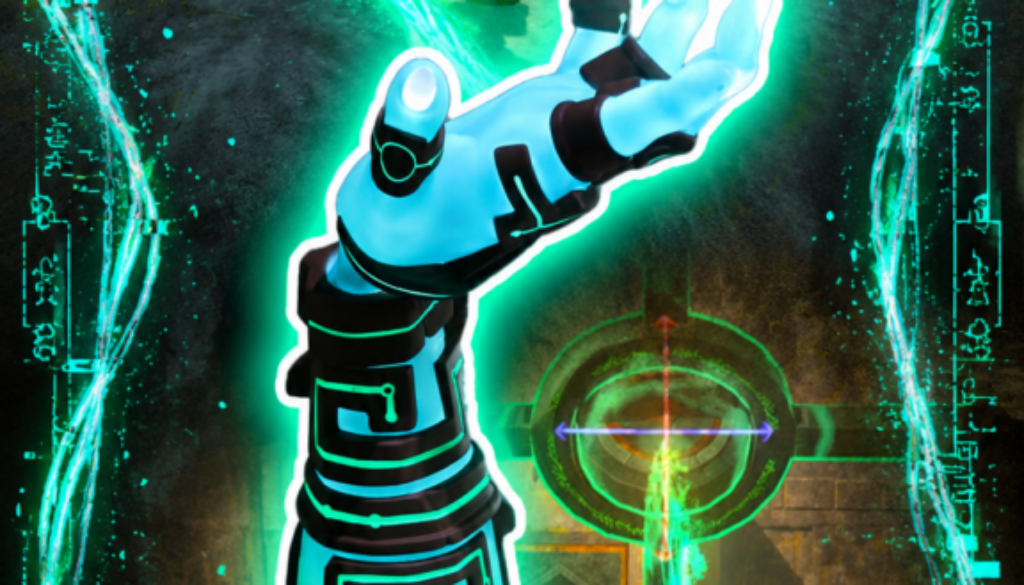
Magic becomes more interesting when it is placed inside this physical world. The supernatural abilities do not erase gravity, mass, distance, pressure, or material limits. They pass through those limits and change how the player can negotiate with them. Lifting, combining, reversing, passing through, or redirecting matter feels powerful because the world being changed already has rules. The impossible action gains force from the ordinary resistance around it. A floating platform, a reversed fall, or an attached machine feels strange because it still has to deal with placement, balance, timing, and space. Magic does not remove the body from fantasy. It gives the body new ways to act.
This also reshapes the idea of the hero. Courage remains present, but curiosity becomes just as central. The player is not only a warrior moving toward destiny. He becomes a builder, climber, tester, mechanic, scavenger, and reader of physical signs. Progress often depends on noticing small details: which object is heavy, which surface can carry weight, which material burns, which angle creates motion, which force can be borrowed, and which failed attempt contains a better idea. Heroism becomes practical. It lives in attention, patience, and invention. The world is saved not only through battle, but through a repeated willingness to see matter as possibility.

The lasting effect of this design is that mechanics become atmosphere. Physics is often discussed as a technical achievement, but here it shapes the emotional tone of the adventure. The world feels ancient because its broken machines still respond. It feels lonely because the player is often surrounded by objects that have outlived their makers. It feels playful because nearly every material can be pulled into a new experiment. It feels mysterious because simple rules can create results that seem surprising without feeling fake. Motion and matter become part of the memory of the journey. Players remember where they went, but also how something rolled, fell, lifted, snapped, burned, carried, or collapsed.
The fantasy becomes powerful because it refuses to stay distant. Its wonder lives in contact: the pause before a boulder drops, the brief lift of hot air, the strange balance of a bad machine, the surprise of a plan surviving just long enough. The world does not feel endless only because it is large. It feels endless because each object can suggest another use, each failure can open another path, and each rule can become the beginning of another experiment. Myth gives the adventure its shape, but physics gives it skin, weight, pressure, and breath. The result is a form of magic that can be felt in the hands.